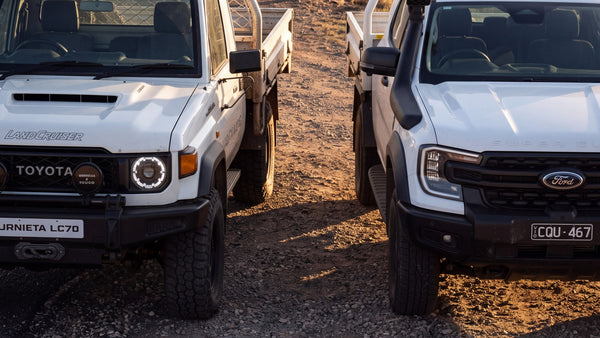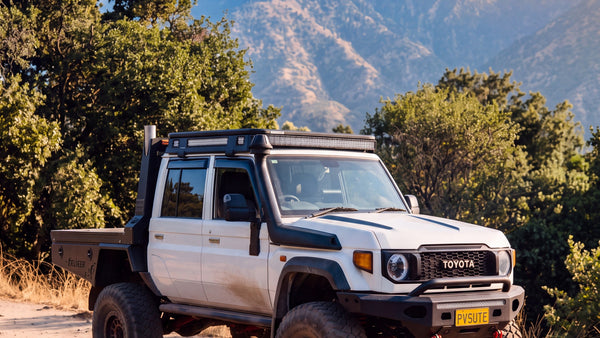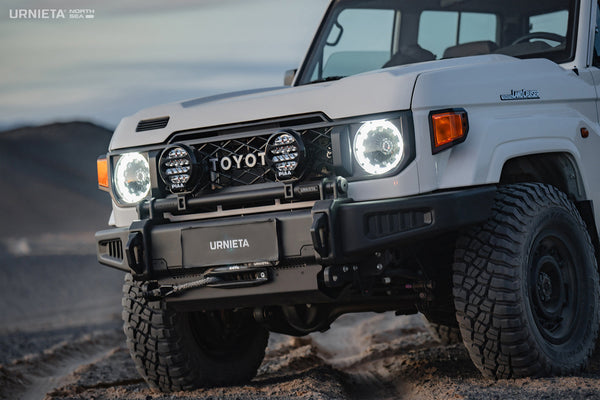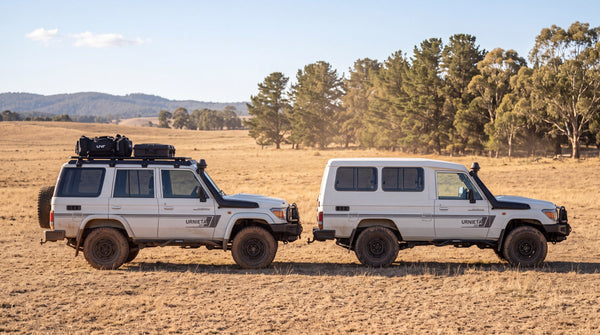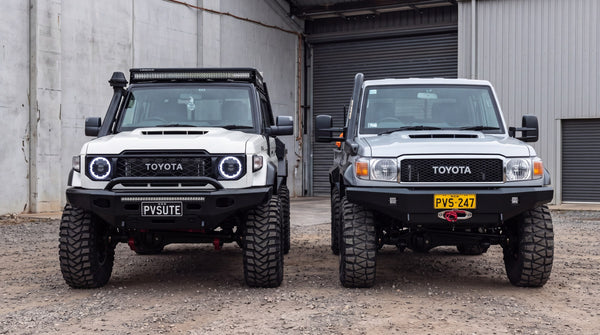



The 6x6 79 Series LandCruiser exists because a standard 79 runs out of payload long before a mining, station or expedition build runs out of gear. You'll spot them on Pilbara mine sites, on remote Northern Territory cattle stations and under serious overland trays: a Toyota LandCruiser 79 Series stretched to an extra axle, sitting low and purposeful. Demand for a well-built 6x6 79 Series for sale keeps climbing as operators push fleets into harder terrain with heavier loads.
So what goes into one, and why would you spend that kind of money converting one of Toyota's most proven platforms?
At a Glance
- 6x6 conversions add a third driven axle to the standard 79 Series twin-cab or single-cab chassis.
- The primary purpose is increased payload and stability, particularly on soft or uneven terrain.
- Each conversion is individually engineered and certified, making every build a bespoke project.
- Mining, agriculture and serious expedition travel are the three main use cases in Australia.
- The cabin remains a standard 70 Series interior, meaning all the usual tech and audio upgrades apply.
Why you'd convert a 79 Series to 6x6
The answer is almost always payload. A standard 79 Series dual cab is rated to carry roughly a tonne once you account for the tray. Serious mining, agricultural and expedition setups blow through that figure fast. A third driven axle spreads the load across six wheels, lifts the legal carrying capacity substantially and keeps the vehicle stable when the weight is up high or the ground is soft.
Stability is the second win. A loaded 6x6 sits flatter through soft sand, river crossings and rutted station tracks. The extra contact patch means less digging in where a heavily loaded 4x4 would struggle. If you're carrying water, fuel and a full living setup into remote country, that margin is the difference between confident travel and constant care.
How a 6x6 conversion works
There's no factory 6x6 LandCruiser. Every example on Australian roads started as a standard 79 Series and went through a specialist conversion. The chassis is extended, a third axle is engineered into the driveline, and the braking, suspension and electronics are reworked to suit. The build is then individually certified for registration, so no two conversions are quite the same and the engineering paperwork matters as much as the hardware.
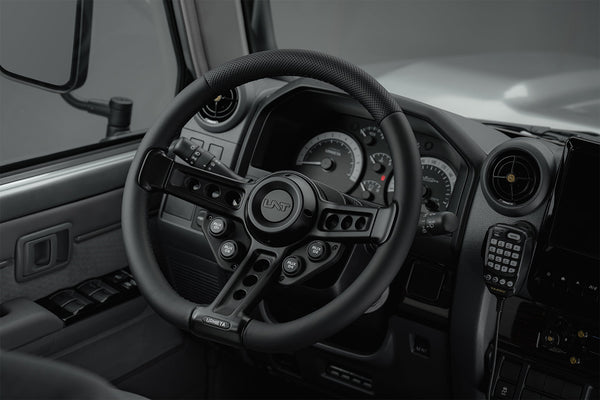
The conversion happens behind the cab, so the cabin stays a standard 70 Series interior. Everything that fits a normal 79 Series fits here: head units, steering wheels, switch panels, door pods and sound deadening all carry straight across.
How much will it cost?
These are six-figure builds. Between the donor vehicle, the conversion, the engineering certification and the equipment that usually goes on top, a finished 6x6 79 Series sits well beyond the price of any showroom LandCruiser. Complete examples move quickly when they reach the market, because the alternative is a year or more of build time.
Our own build is the honest benchmark. The total cost of the finished PVS 6x6 build exceeded $300,000, it was offered at $190,000 plus GST, and it has since been sold.
The PVS 6x6
PVS Automotive built and displayed its own 6x6 79 Series, finished in deep blue over a Cognac leather interior with four Recaro seats. The conversion was completed in Australia, riding on 17 inch ROH wheels with 37 inch Maxxis rubber and Superior Engineering 2.5 shocks. It drew a crowd everywhere it appeared, and it has now gone to its new owner.
 Watch the full walkaround of the finished PVS 6x6 on YouTube.
Watch the full walkaround of the finished build and see the original PVS6X6 listing for the complete spec sheet. Final build images are coming soon.
If you're buying a 6x6, check these
- Engineering certification. Ask for the paperwork first, not last. A 6x6 without proper certification is a project, not a vehicle.
- Who did the conversion. A handful of Australian specialists do this work properly. Know whose axle and driveline engineering is under the tray.
- GVM and payload rating. Confirm the certified figures match what you actually plan to carry.
- Driveline condition. The additional axle adds joints, bearings and shafts. On a used build, service history on the conversion hardware matters more than the odometer.
- The cabin. It's still a 70 Series interior, so bring it up to the standard of the rest of the vehicle. A build at this level deserves better than the factory head unit and wheel.
Shop the 70 Series range
- 9" MK4 Multimedia Headunit for Toyota 70 Series - Wireless Apple CarPlay and Android Auto, plug-and-play fitment
- 70 Series Steering Wheel Upgrade Kit - ADR compliant, retains factory steering wheel controls
- 70 Series Switch Panels - Purpose-built switch panel solutions for the LC70
- PVS Door Pods - Custom door pod solutions for the 70 Series
- Wireless Steering Wheel Controls Module - Integrate your aftermarket headunit with factory controls
Browse the full LandCruiser 70 Series accessories range or email info@pvsautomotive.com.au.