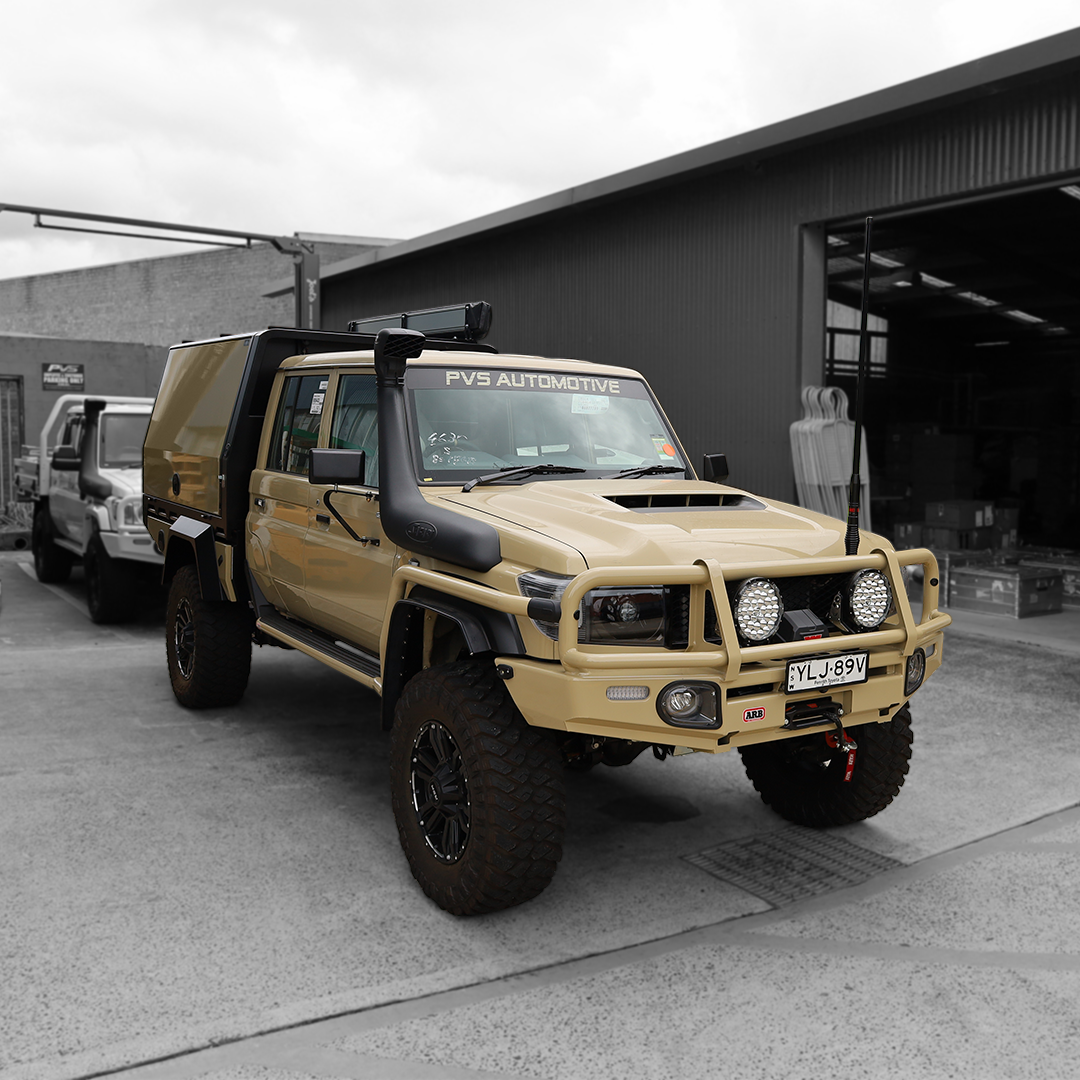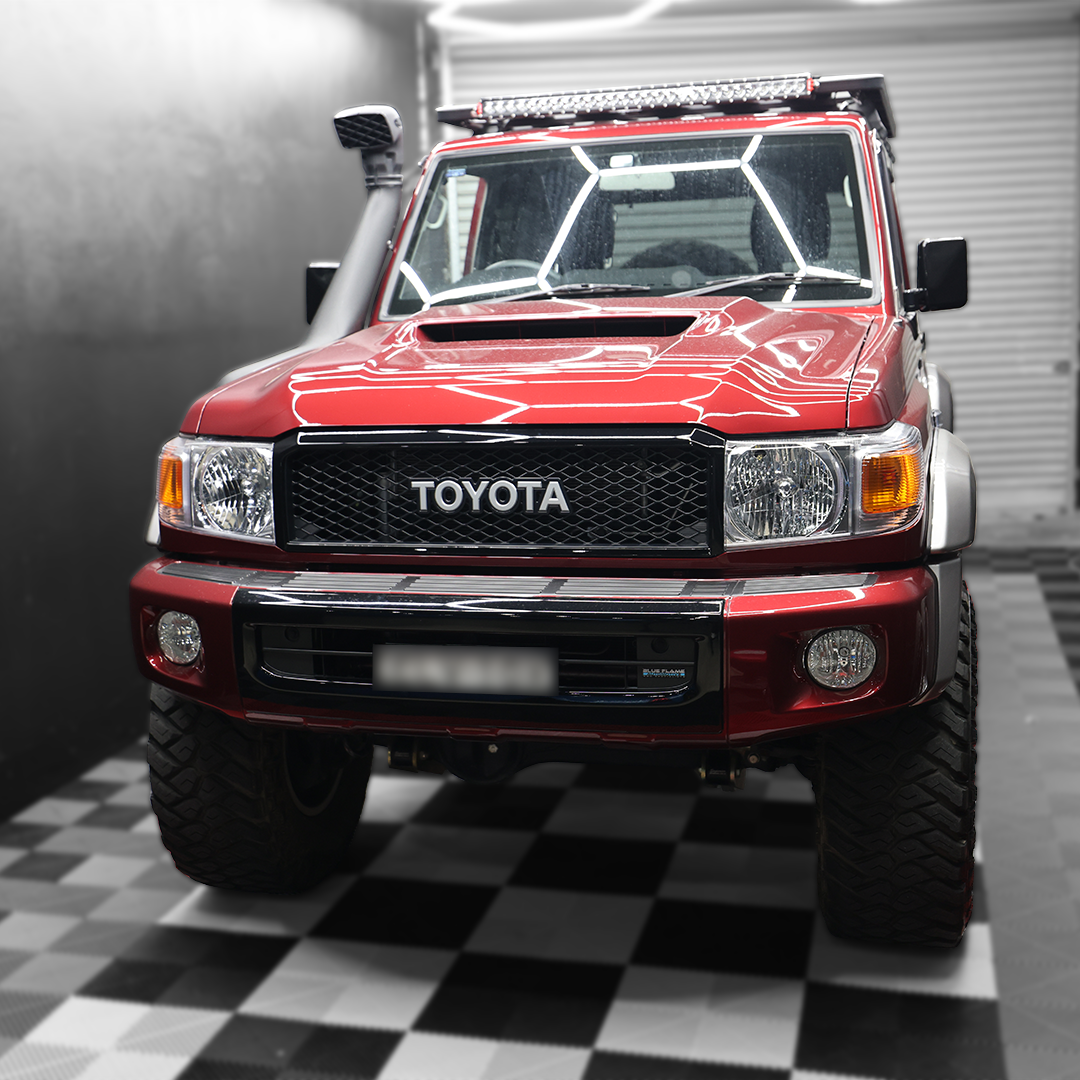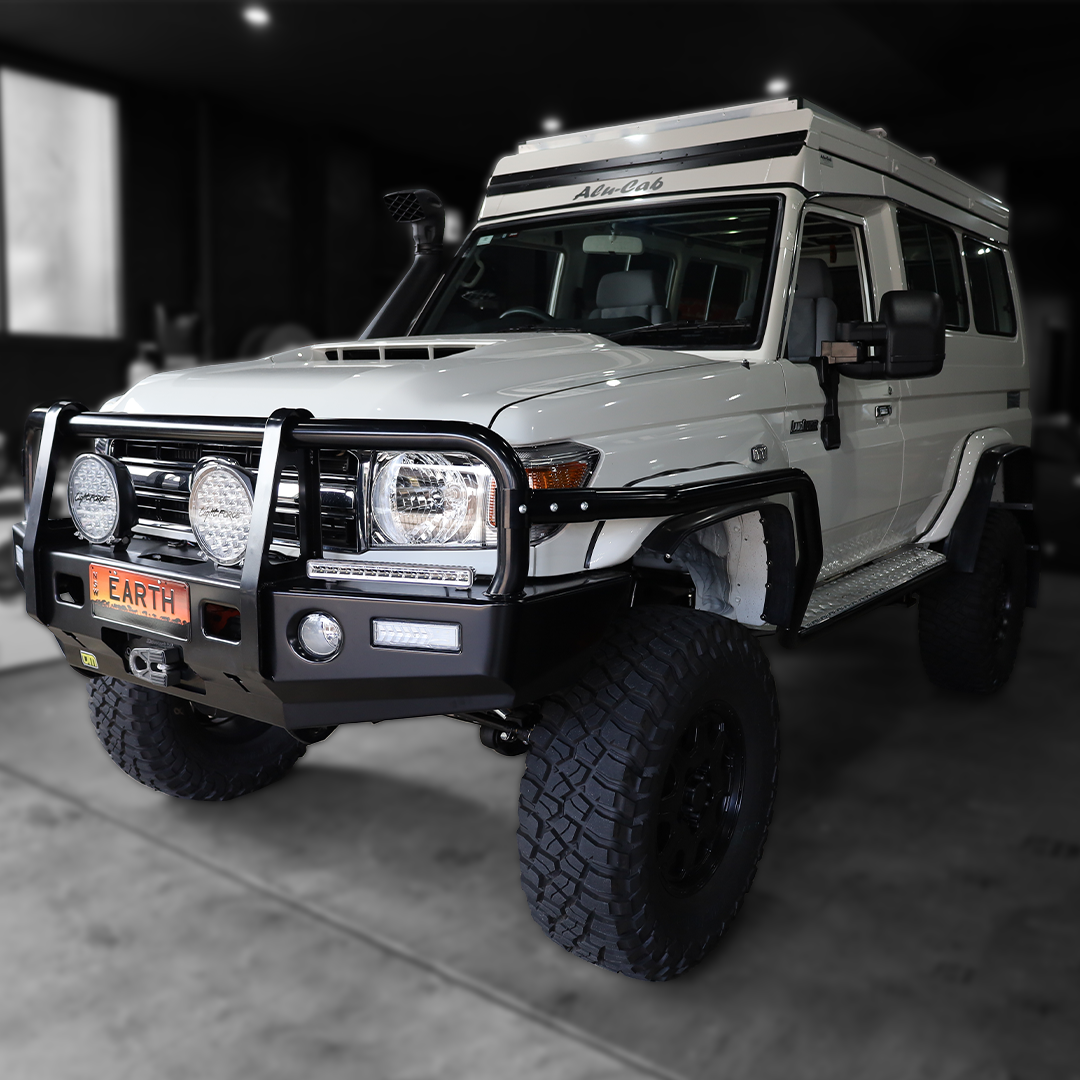



The Brief: Clean Lines, Hidden Function
Some builds start with a long wishlist. This one started with a single non-negotiable: fit a surfboard inside the canopy without touching the exterior lines. No visible rails, no roof racks, nothing bolted to the outside that would give the game away. From the kerb, it had to look exactly as it did the day it rolled out of the factory. Clean, purposeful, uncompromised.
On the surface, that sounds straightforward enough. In practice, working around the tight tolerances of a Toyota LandCruiser 70 Series canopy meant every decision had to be deliberate. There was no room for bulky brackets, no tolerance for anything that would foul the load space or complicate the day-to-day use of the tray. The customer knew what they wanted, and the team at PVS Automotive set about making it happen without cutting corners anywhere else in the build.
The Platform: Toyota LandCruiser 70 Series
The 70 Series needs little introduction in Australia. It has been the working backbone of stations, mine sites, fire services and remote communities for decades, and it remains the benchmark for serious off-road capability in a body-on-frame package. But increasingly, owners are asking more of the platform than it was originally specced to deliver. They want the reliability and the go-anywhere ability, and they also want comfort, connectivity and a finished interior that reflects how they actually use the vehicle day to day.
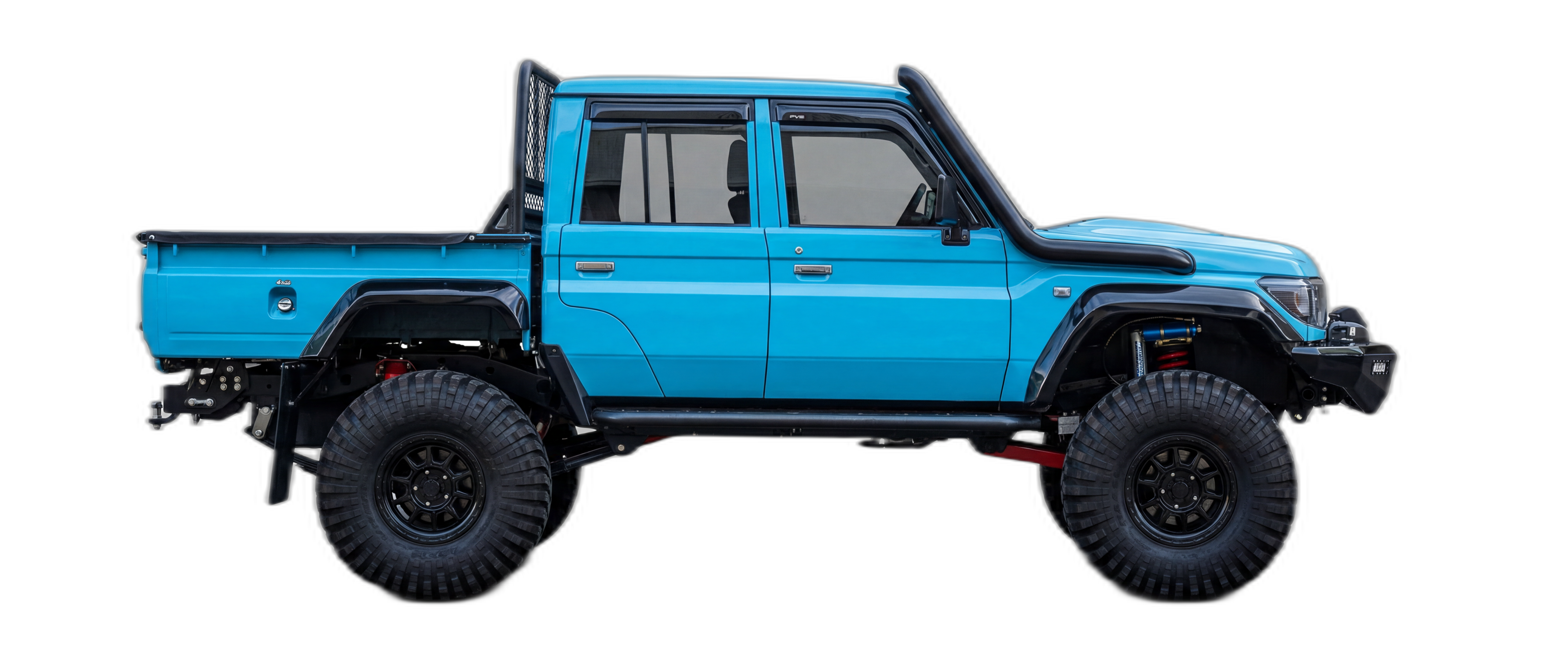
This particular LC70 came in as a well-maintained dual-cab with solid bones and an owner who had clearly looked after it. The exterior was tidy. The mechanicals were in good shape. What it needed was a thoughtful upgrade across the cabin and a purpose-built internal canopy solution that nobody would ever spot from the outside.
Interior Upgrades: Where Daily Comfort Begins
The factory interior of the 70 Series is famously spartan. Toyota designed it to be tough, not luxurious, and for a lot of applications that is exactly right. But for an owner who spends long hours behind the wheel on highway runs and dirt tracks, the gaps in comfort and connectivity start to add up quickly.
The first priority was the head unit. The factory audio setup in the LC70 is functional at best, and the absence of modern connectivity features means every drive involves a workaround of some kind. PVS Automotive installed an aftermarket head unit with a large touchscreen display, Apple CarPlay and Android Auto integration, Bluetooth audio and hands-free calling, and reversing camera compatibility. The interface is clean and responsive, and the installation was done to maintain the factory look of the dash as closely as possible. No rough edges, no exposed wiring, no tell-tale gaps around the fascia.
Alongside the head unit, the speaker setup was upgraded to match. The factory speakers in the 70 Series are a weak point, and no amount of head unit quality will compensate for poor drivers. A component speaker setup was installed front and rear, delivering noticeably cleaner mid-range and better top-end detail than the standard fitment. The improvement in overall sound quality is immediately obvious, whether you are listening to music, podcasts or navigation audio on a long stretch of highway.
The steering wheel was also addressed as part of the interior refresh. An aftermarket wheel with a smaller diameter and a more ergonomic grip profile was fitted, improving both the feel of the vehicle on the road and the general sense of quality inside the cab. Paired with a boss kit matched to the LC70's column, the installation maintained the integrity of the airbag system and the horn, which is a non-negotiable part of any responsible steering wheel upgrade.
The Canopy Solution: Function Without a Footprint
This is where the build earned its stripes. The customer's brief was a surfboard storage solution that lived entirely inside the canopy. No external rails, no modifications to the canopy shell, nothing visible from outside the vehicle. The board had to load smoothly, sit securely on the road and on rough tracks, and not compromise the remaining storage space in the tray.
The PVS team worked up an internal rail and slide system mounted to the canopy's existing structure, using the available anchor points without drilling new holes into the canopy itself where they could be avoided. The system allows the board to slide in on a protected track, lock in position, and ride safely without any movement or contact with the canopy sides. Padding and protective lining were used throughout to keep the board's finish intact, and the whole setup is reversible if the owner's needs ever change.
From outside, the canopy looks exactly as it should. There is nothing to suggest anything has been modified. That was the brief, and that is exactly what was delivered.
Additional Accessories
Alongside the main scope of work, a few practical additions were made to round out the build:
- Dual battery management system to support accessories and camping loads without draining the starting battery
- USB and 12V charging points added to the interior for device charging on the go
- Underbody lighting wired into the canopy for practical load space visibility at night
- Antenna upgrade to improve AM and FM reception on remote tracks where signal is marginal
The Result
This is the kind of build that does not announce itself. It is not loaded with visual accessories or covered in stickers. It is a clean, capable vehicle that has been made meaningfully better in the ways that matter to its owner. The interior is more comfortable and more connected. The canopy does something clever that nobody on the street would ever guess. And the whole thing holds together as a finished, considered package rather than a collection of bolt-ons.
Mission accomplished.
Photos to follow.
Shop Products Featured in This Build
- 9" MK4 Multimedia Headunit for Toyota 70 Series - Wireless Apple CarPlay and Android Auto, plug-and-play fitment
- 70 Series Steering Wheel Upgrade Kit - ADR compliant, retains factory steering wheel controls
- 70 Series Switch Panels - Purpose-built switch panel solutions for the LC70
- PVS Door Pods - Custom door pod solutions for the 70 Series
- Wireless Steering Wheel Controls Module - Seamlessly integrate your aftermarket headunit with factory controls
Browse the full LandCruiser 70 Series accessories range or book an installation at our Kogarah workshop.