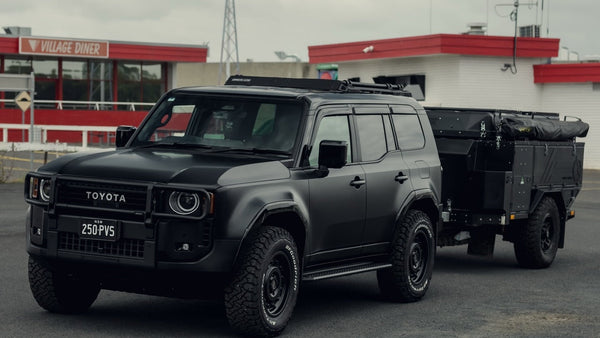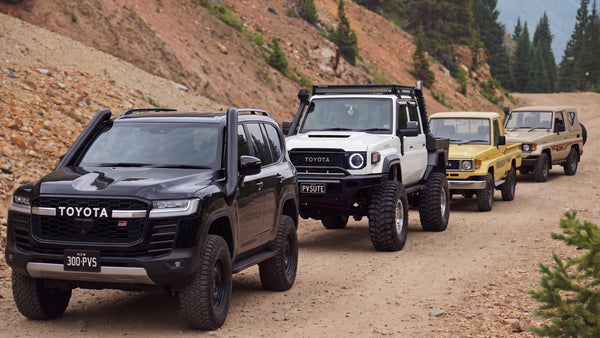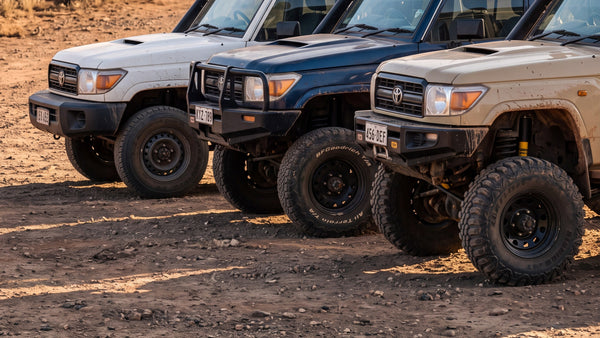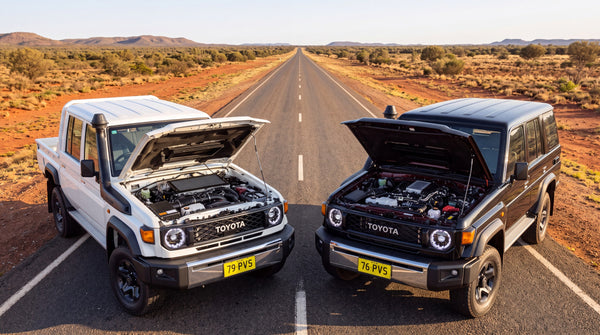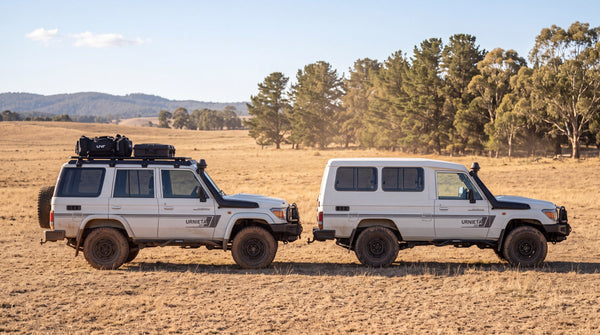



The LC76 wagon sits in a sweet spot in the 70 Series family. You get rear-seat room for passengers, a practical tailgate, and the same agricultural durability that made the 70 range a byword for remote-area reliability. Straight from the factory it still leaves a fair bit on the table, particularly for long-distance comfort and connectivity. Get the build order right and you spend on the things that matter most, first.
Planning a family lap of the continent or regular outback runs to a station? Here's how we'd equip a 76 Series touring build from the ground up.
At a Glance
- Sort navigation and communications before any other cabin upgrade.
- Audio matters more than most people admit across hundreds of kilometres of corrugations.
- A 76 Series roof rack adds carrying capacity without eating into interior space.
- Steering wheel and interior comfort upgrades pay off on multi-day drives.
- From MY26, the 76 Series auto runs AdBlue, so carry a top-up for remote runs.
Step 1: Sort navigation and communications
This is the non-negotiable first cab off the rank. A phone with Google Maps is fine in the suburbs, but in no-reception country it's a liability. A quality headunit running offline Newtracs mapping gives you verified four-wheel-drive tracks, water crossings and campsite data without a single bar of signal. The PVS 70 Series headunit range is built for exactly this, with large-format screens and Android-based platforms that support Newtracs natively. Pair it with a UHF CB and, if the budget allows, a PLB or satellite communicator. That's your comms foundation sorted before a single kilometre of dirt.
Step 2: Fix the audio for the long kilometres
Twelve hours across the Nullarbor with wind noise and a tinny factory speaker gets old quickly. A proper speaker upgrade, door pods and a dedicated speaker kit tuned to the 76's cabin, changes the drive for everyone on board. It's also the logical time to do it, while the door trims may already be off for wiring runs from the headunit install. Doing it in sequence saves labour time and keeps the build tidy behind the panels.
Step 3: Add racks and storage
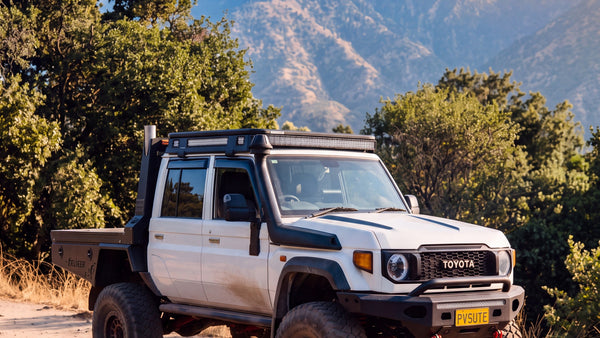
Once the cabin tech is sorted, look at what goes on top and around the vehicle. A 76 Series roof rack is one of the highest-return buys you can make. It moves jerry cans, recovery tracks, a rooftop tent or a swag off the floor and out of the passenger space. The Urnieta 70 Series roof rack range is engineered for the 70 family's roof geometry and load requirements. Add drawers, Wolf Packs or a cargo barrier to organise the rear, and the LC76's load area becomes genuinely usable rather than a pile of gear.
Step 4: Get comfortable behind the wheel
This one gets skipped by builders focused on mechanical and exterior gear, and it matters enormously on a touring build. Spend six or eight hours a day behind the wheel of a 76 Series and you notice the factory steering wheel inside the first hour. An upgraded leather or carbon-finish wheel, with a steering wheel control interface that keeps your headunit integration intact, makes a tangible difference. Seat comfort, armrests and interior ergonomics all compound over days on the road, so budget for them.
Step 5: Specify your lighting
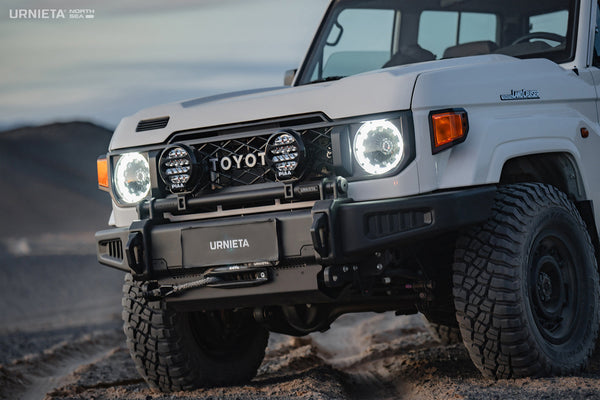
Driving lights, rock lights and a quality LED light bar round out the build. Lighting comes last not because it's unimportant, but because it depends heavily on the routes you plan to run and the time of day you travel. A family touring the main highways has different lighting needs to someone running station tracks at night. Work out your actual use case first, then specify accordingly.
If you're buying an MY26 with AdBlue
From the 2026 model year, the 76 Series automatic carries a 20-litre AdBlue tank as part of its emissions compliance. For touring, that's not a drama. AdBlue consumption is predictable and the tank capacity is generous, and it does mean adding a small AdBlue top-up supply to your remote-area kit list, the same way you'd carry a spare fuel filter or diff oil. For what AdBlue means in practice for 70 Series owners, read our AdBlue explainer.
The bigger picture
A well-specced 76 Series touring build doesn't happen in a single weekend, and it shouldn't. Building in priority order keeps the vehicle usable and safe at every stage, instead of a roof full of gear and no way to navigate off the beaten track. The Urnieta LC76 range covers the exterior and touring hardware, and PVS handles the cabin technology that makes those long kilometres enjoyable. Take it one step at a time and you'll end up with a rig that earns its keep on every trip.