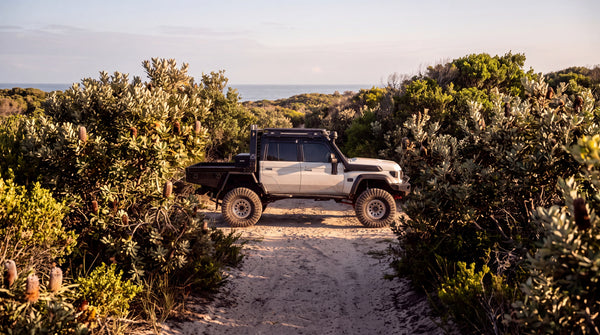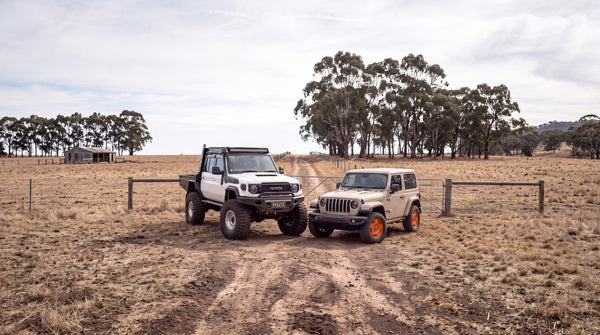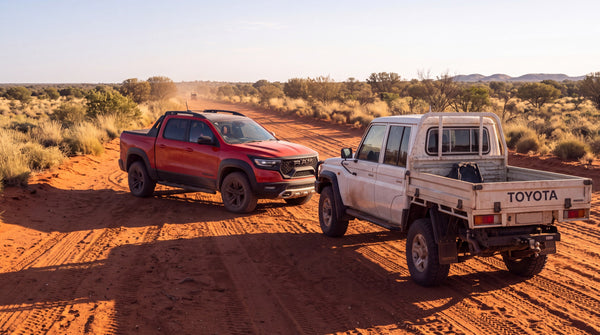



A new 4x4 engine is a fundamentally different machine to the one it replaced twenty years ago. Common-rail injection, piezo injectors, variable-geometry turbos, AdBlue dosing, hybrid drive units, 48-volt mild-hybrid architectures. Each of those systems solved a real problem, usually emissions or fuel economy, and each added a failure mode a country mechanic may not be equipped to diagnose. That isn't a criticism. It's a fact about how the technology has developed, and it matters the moment you're two hundred kilometres from the nearest dealer.
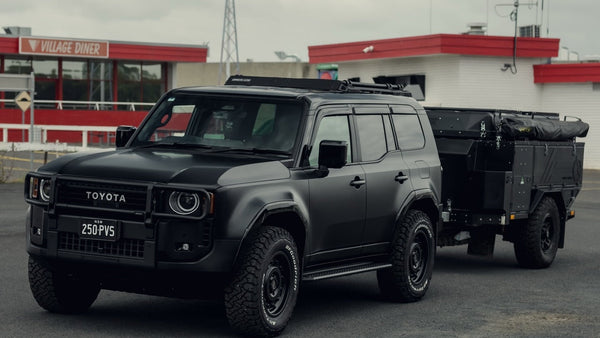
The LandCruiser 300 Series GR Sport Performance Hybrid is the sharpest version of that question right now. It's a genuinely capable touring wagon with a big cabin and the off-road hardware to back up the badge. It's also a twin-turbo V6 petrol with a hybrid drive system and enough electronics layered over the top that a roadside repair means something very different to what it meant with the 1FZ-FE or the 1HD-FTE. Even the V6 diesel, without the hybrid system, is a modern common-rail engine with the complexity that entails. No version of the 300 Series has a simple powertrain. Toyota didn't set out to build one, because the market didn't ask for one.
What the new machinery genuinely does well
It would be dishonest to frame this as new bad, old good. The 300 Series makes 341kW and 790Nm in petrol-hybrid form. It's quieter on a long highway run than any 70 Series will ever be, and its safety equipment, passive and active, is in a different class. The fuel economy of the hybrid on a sealed touring run is competitive with a diesel. For a family that does eighty per cent of its driving on bitumen but still wants Cape York on the list, the 300 Series is a serious answer.
The honest question isn't whether the new machinery is good. It's what happens when it breaks down where there's no dealer, and whether the build you want to put on it is actually supported.
Where the 70 Series argument starts
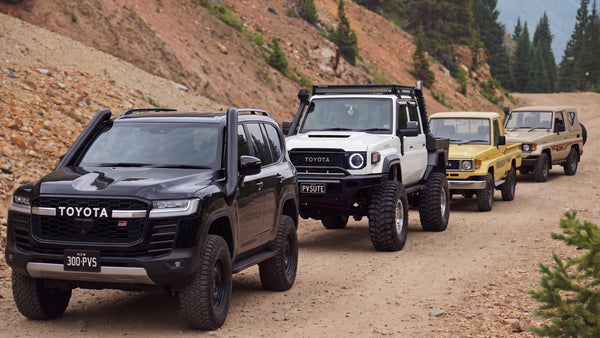
The 70 Series has been in continuous production since 1984. The 1VD-FTV V8, now out of production in Australia, powered the platform for over a decade. The 1GD-FTV 2.8-litre four-cylinder that replaced it has been in the field long enough that independent mechanics across regional Australia know it well, AdBlue system included. Parts for both engines sit on shelves at rural spare parts stores in a way that parts for a 300 Series hybrid drivetrain don't, not yet, and possibly not for a long time outside major centres.
That parts availability isn't a vague comfort. It's the direct result of thirty years of the platform being on the road in the same country towns where you might need it fixed. The aftermarket behind it tells the same story. It has thirty years of fitment data, GVM upgrades engineered for the chassis and fabricators who've built a hundred trays and know exactly where the tie-down points need to be.
The build argument
If you're speccing a serious touring rig, the 70 Series is where the aftermarket is deepest. A four-inch lift on 35s is a supported and well-understood modification on the platform. GVM upgrades to carry a loaded canopy or a heavy tray come from multiple engineers who know the chassis. Long-range tanks, dual-battery systems, full interior rebuilds in leather or carbon fibre trim, every one of those has been done hundreds of times on a 70 Series, and the people who do them are spread across the country rather than concentrated in capital cities.
A snorkel bolts to a known airbox position. A tray goes onto a chassis fabricators have measured and welded to for decades. Wiring a dual-battery system into the 70 Series doesn't mean navigating a hybrid control unit or a 48-volt bus. That's not a theoretical advantage. It's the practical difference between a build that takes four weeks and one that takes four months while the fabricator waits on engineering approval for a platform he's never seen before.
None of that means a 300 Series, a Ranger, a Defender or a Prado 250 can't be modified. They can, and the aftermarket for all of them is growing. The point is that the 70 Series aftermarket is already there, already proven and already priced into the second-hand market in a way that makes the total cost of a built rig genuinely competitive with buying new.
The 2.8 and the AdBlue question
The current 70 Series isn't a simple vehicle in the way a 75 Series was simple. The 1GD-FTV has AdBlue, a diesel particulate filter and a modern injection system. It's more complicated than the V8 it replaced. If you tour remote areas you need to carry AdBlue and understand what happens if you run out or contaminate the tank. That's a real consideration, not a dismiss-it-and-move-on detail.
The difference is one of degree and ecosystem. Independent mechanics have been dealing with the 2.8's emissions system since the engine arrived in the HiLux and Prado, well before it went into the 70 Series. The knowledge base and the tooling exist outside dealer networks. A hybrid drivetrain on a 300 Series is a different category of specialisation, and that gap is likely to widen before it narrows.
The case for starting with the 70
The argument for buying an older platform and building it properly isn't new. It's been the logic behind every serious overlander who bought a 78 wagon or a 79 dual cab and spent twelve months turning it into exactly the vehicle they needed. What's changed is that new vehicle complexity has made that logic more compelling to buyers who would previously have defaulted to new.
If your touring requires genuine remote self-sufficiency, the 70 Series is still the clearest starting point. Not because the new machinery is bad. Because the platform beneath you, the parts network behind it and the aftermarket supporting it have had thirty years to mature, and that maturity is worth more in a pinch than any amount of on-paper capability.
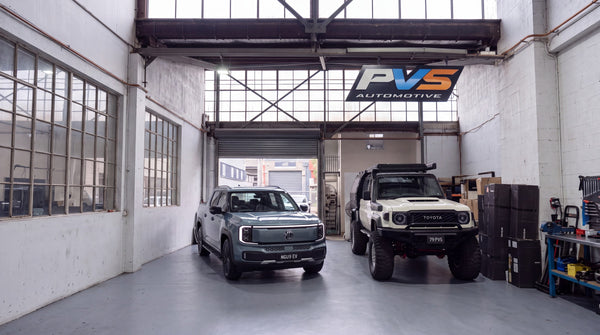
PVS Automotive builds steering wheels, interior trim and headunits for the 70 Series for the same reason. It's the platform worth investing in.