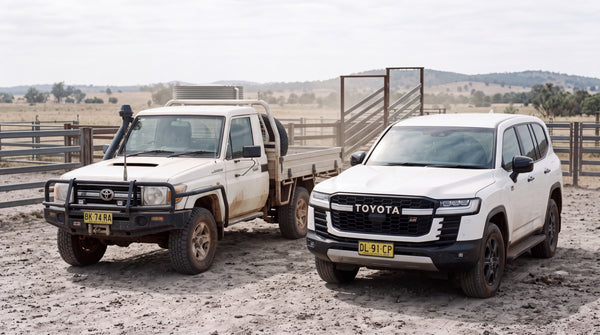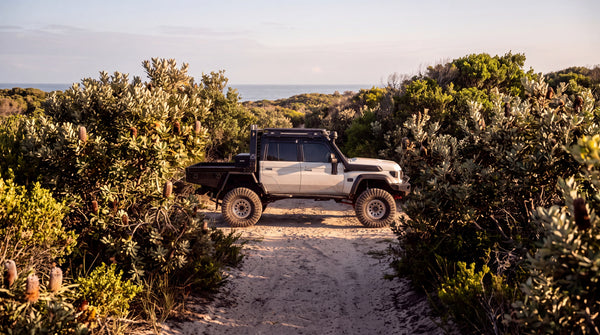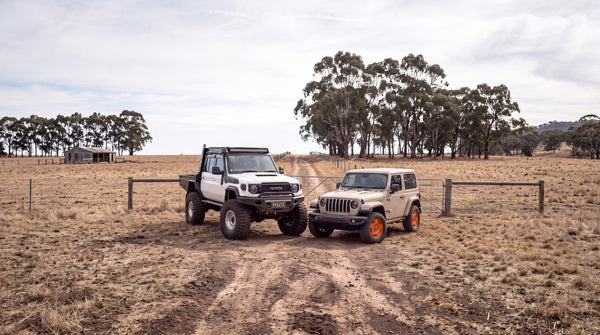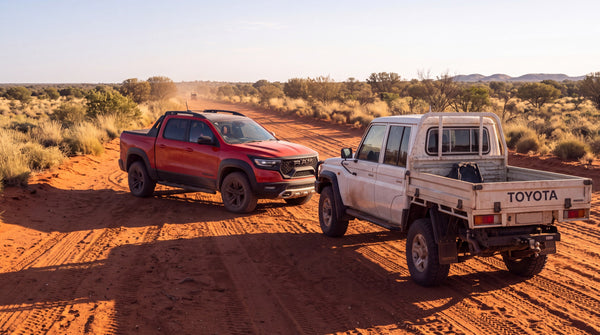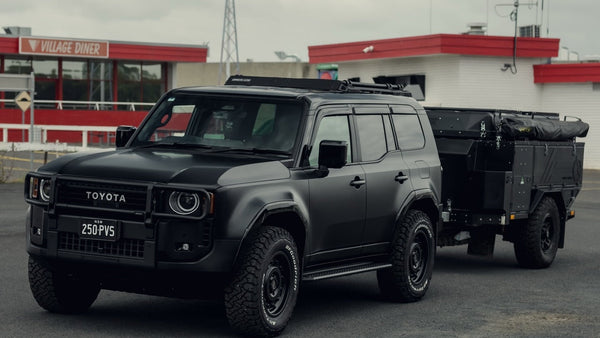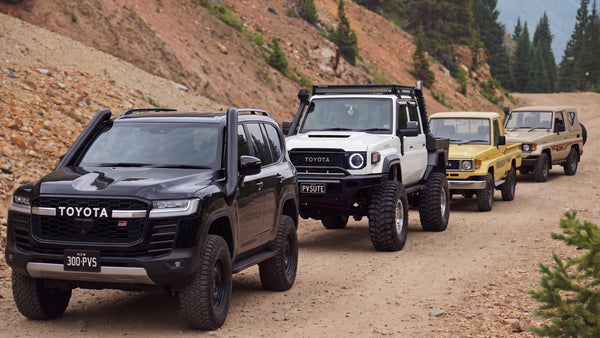



Petrol was written off in the LandCruiser story years ago. Toyota pulled the V8 from the 200 Series after slow sales, and the diesel became the only option for every serious buyer. That changed in 2026. Toyota Australia fitted the twin-turbocharged 3.5-litre V6 single-motor hybrid system, already proven in the Tundra and the Lexus LX 700h, to the LC300. The move was helped by the fact that all three vehicles share the TNGA-F platform, so the transplant was relatively straightforward.
The result is a combined output of 341kW and 790Nm, making the Performance Hybrid the most powerful and quickest LandCruiser ever offered in Australia. That's not a small claim for a nameplate that's been running since the 1950s. The electric side of the system runs through an air-cooled 6.5Ah, 288V nickel-metal hydride battery, housed in a waterproof tray under the rear cargo floor. It raises the floor height very slightly, and it limits the Performance Hybrid to five-seat configurations only.
At a Glance
- Twin-turbo 3.5-litre V6 hybrid: 341kW and 790Nm combined output
- GR Sport Performance Hybrid priced at $155,990, up from $137,790 for the diesel GR Sport
- Five-seat only due to battery placement under the cargo floor
- GR Sport-specific hardware: front and rear diff lockers, e-KDSS suspension, 18-inch tyres, Multi-Terrain Select with additional modes
- On-test fuel consumption came in at 14.8L/100km
What it costs and who it's for
Toyota Australia is offering the Performance Hybrid powertrain in two variants: the Sahara ZX at $156,740 and the GR Sport at $155,990. The diesel versions of those same models sit at $138,790 and $137,790 respectively. You're paying roughly $18,000 more for the hybrid in either case. On-test fuel consumption came in at 14.8L/100km, which is the honest trade-off: this isn't a frugal drivetrain, it's a performance one that happens to use petrol instead of diesel.
If that gap matters less to you than outright performance, the maths starts to look different. The electric motor delivers diesel-like torque low in the rev range, and the turbocharged V6 then carries that pull right through to the top end. That combination is genuinely different to anything Toyota has offered in a Cruiser before.
Off-road hardware on the GR Sport
The GR Sport is the most capable model in the LC300 lineup regardless of which engine sits under the bonnet. It gets front and rear locking differentials, e-KDSS electronic suspension that disconnects the sway bars under load to maximise wheel travel, and 18-inch tyres that give more sidewall than the larger-diameter wheels on other grades. Multi-Terrain Select also gains additional modes on this variant.
In practice, the e-KDSS works well. On flooded, rutted tracks the heavy LC300 articulates in a way that surprises you, crawling through boggy ground with the diff locks engaged and Mud & Ruts selected. The suspension moves with the terrain rather than against it, which is more than you'd expect from a wagon that also handles highways and wet gravel roads without drama.
One consistent complaint: the diff lockers took longer to engage than you'd want. The indicator lights on the dash kept flashing while the lockers found their way in, and that hesitation is noticeable when you've already committed to a difficult line. It's not a dealbreaker, but it's the kind of thing you'd want to know before you rely on them.
Geometry and ground clearance
The GR Sport's off-road geometry is worth knowing before you plan a trip. Ground clearance is 231mm. Wading depth is 700mm. The approach angle is 31 degrees, ramp-over 21 degrees, and departure angle 24 degrees. Crawl Control and the tight-turn function are both on board, though neither was needed on the drive.
What the hybrid powertrain actually feels like on the road
On sealed roads the LC300 GR Sport has always been a composed, stable tourer. The Performance Hybrid version adds urgency to that composure. The electric motor fills in the low-end response immediately, and the turbocharged V6 takes over from there without any obvious handover point. It's a powertrain that works harder than it feels like it's working, which is exactly what long-distance touring asks for.
Whether 14.8L/100km in mixed conditions is acceptable depends on how you use the vehicle. For someone doing serious kilometres on the highway, the diesel will still be the more economical choice over time. For someone who wants the strongest possible Cruiser and can live with the fuel bill, the Performance Hybrid makes a genuine argument.
Five seats and the battery compromise
The battery placement under the cargo floor is the one structural limitation that shapes who this vehicle suits. If you need seven seats, the Performance Hybrid isn't available to you at all. The floor rise in the cargo area is minor in practice, but the five-seat restriction is a real constraint for families who use the third row regularly.
Toyota has been clear that the Performance Hybrid is a high-grade, high-specification product. Both the GR Sport and the Sahara ZX are fully loaded inside, with the GR Sport adding red trim accents and GR badging throughout the cabin to separate it from the Sahara ZX's more formal interior approach.
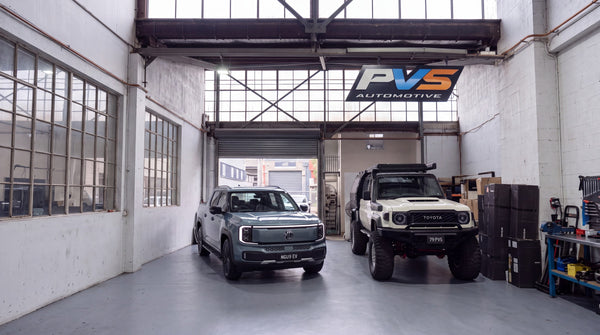
The 300 Series GR Sport is one of the vehicles we carry product for at PVS, and if you're building yours out, our fitment range for the LC300 is a good place to start.