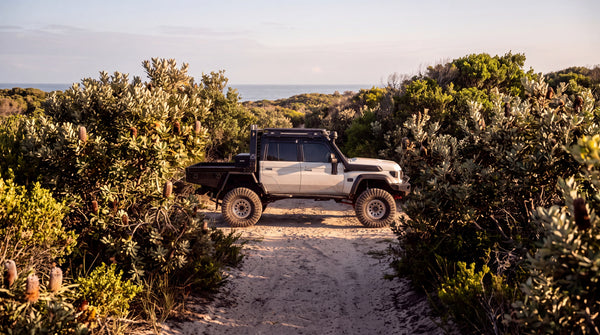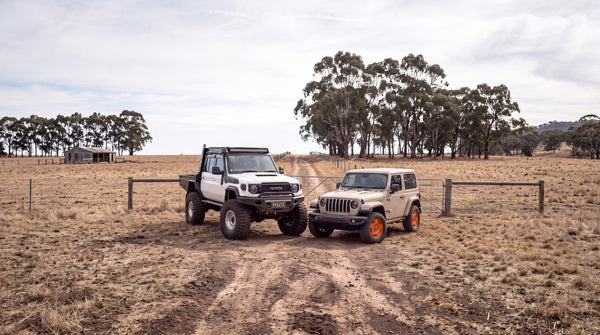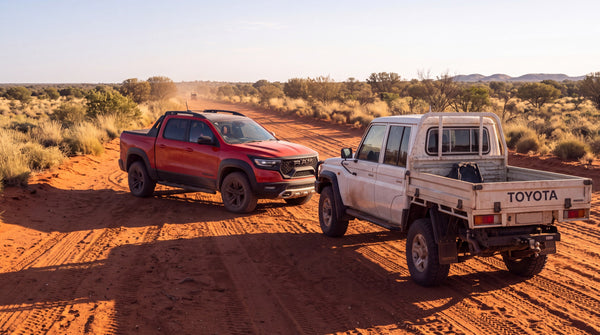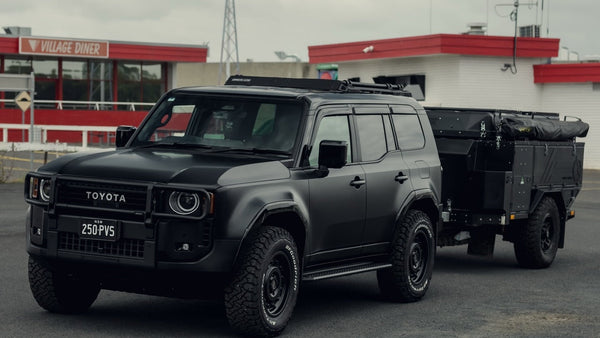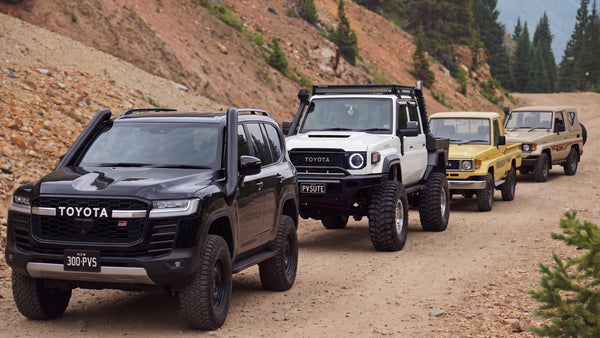



Toyota launched the LandCruiser 70 in 1984 to replace the 40 Series, and it's still in production more than forty years later. Farmers, miners, park rangers and remote-community workers have relied on it through floods, droughts and everything in between. It has outlived countless competitors and resisted almost every modernising pressure the industry could throw at it. The formula, body-on-frame construction, live axles front and rear, and no-nonsense vinyl floors on work grades, has proven stubbornly, brilliantly correct.
That longevity isn't accidental. It's the product of deliberate, incremental engineering timed to meet Australian safety legislation, shifting fleet demands and changing buyer expectations, without losing the rugged character that made the nameplate famous. Here's how four decades shaped the 70.
At a Glance
- Launched 1984 as a direct replacement for the 40 Series, retaining body-on-frame and live axles.
- Key safety steps: dual airbags in 2009, ABS across the range in 2012, five-star ANCAP for the single cab in 2016.
- Late-2023 facelift introduced the 2.8-litre four-cylinder auto, retro-inspired styling, and a modern multimedia unit.
- The V8 era, which began in 2007, is drawing to a close with the AdBlue changeover expected across 2025 and 2026.
- Through every update the core proposition, vinyl floors, live axles, body-on-frame, has never changed.
1984: the 40 Series steps aside
The 40 Series had earned a fierce reputation across Australia's outback tracks and station properties since the 1960s. Replacing it was never going to be straightforward. Toyota's answer wasn't a reinvention, it was an evolution.
The 70 Series carried over the essential architecture: a ladder-frame chassis, solid front and rear axles and a utilitarian cabin. It added improved torsional rigidity and a broader body range from the outset. The wagon, troop carrier and ute variants gave fleet buyers real choice, and the platform's repairability in remote areas made it an immediate hit with rural and resource-sector operators.
2007: a restyle and the arrival of the V8
By the mid-2000s the 70's cabin was showing its age against newer dual-cab utes. Toyota responded with a significant restyle in 2007: updated sheetmetal, a refreshed interior and, most significantly, the 4.5-litre V8 single-turbo diesel.
That gave the range the performance and torque boost fleet operators had been asking for. The V8 became the engine of choice for heavy towing and high-payload work, cementing the 70's position at the top of the commercial-vehicle hierarchy in Australia.
2009: dual airbags arrive
Toyota Australia added dual front airbags across the 70 Series range in 2009. That was a meaningful step for occupant protection in a segment that had traditionally put durability ahead of passive safety.
It was an early signal that Toyota understood the 70 couldn't stay exempt from the broader safety improvements reshaping Australian new-vehicle regulations.
2012: ABS and the first factory double cab
The 2012 update delivered two headline changes. Anti-lock brakes arrived across the entire range, answering one of the most frequently cited criticisms from safety advocates.
Every bit as significant for the ute market was the first factory-built double cab. It gave the 70 a credible answer to the growing wave of lifestyle dual-cab utes, while keeping the payload and towing numbers commercial operators needed.
2016: five-star ANCAP for the single cab
The 2016 safety re-engineering was arguably the most ambitious structural update the 70 had received since launch. The single cab achieved a five-star ANCAP rating, which took significant work to the cab structure and restraint systems without compromising the vehicle's core character.
Getting that result out of a body-on-frame, live-axle platform quietened critics who had long argued the 70 was fundamentally incompatible with modern crash standards.
2022: safety and payload upgrades
The 2022 update brought further occupant-protection improvements alongside payload revisions aimed squarely at mining and civil construction fleets.
Those changes kept the 70 competitive in government and resource-sector tenders, where safety compliance requirements had become increasingly stringent. If you run a large fleet in remote country, they were practical changes rather than marketing exercises.
Late 2023: the facelift that surprised everyone
The late-2023 facelift drew more public interest than any 70 Series update since the V8. Toyota paired a retro-inspired exterior, pulling visual cues back toward the original 1984 model, with a thoroughly modern interior and an updated multimedia unit.
The powertrain headline was the 2.8-litre four-cylinder turbodiesel automatic. It broadened the range's appeal if you wanted a more accessible entry point without the V8's fuel consumption.
For aftermarket work, the new multimedia platform opened up fresh integration options for navigation, connectivity and upgraded audio. Our wireless steering wheel control modules, which carry a lifetime warranty on the electronics, are compatible with the updated head unit architecture, so your upgrade stays clean and ADR-compliant.
2025 to 2026: AdBlue, the end of the V8 and what comes next
The next chapter for the 70 Series is already in motion. The move to AdBlue emissions management and the eventual retirement of the V8 turbo-diesel is the most significant powertrain shift the nameplate has seen.
If you've owned one for years, the V8 is the definitive 70 Series engine, and its passing marks a genuine generational boundary. What it won't change is the vehicle's fundamental DNA. Body-on-frame construction, live axles and a chassis designed for repairability in the middle of nowhere aren't going anywhere.
The 70 Series has outlasted every prediction and every rival. On the evidence of forty years, betting against it would be a mistake.
Why the formula still works
Independent suspension, monocoque bodies and advanced driver aids have transformed almost every other vehicle segment. The 70 Series has taken on safety technology on its own terms and timetable, but it has never chased the lifestyle-ute market or tried to be something it isn't.
That discipline is why it's still the default if your livelihood depends on a vehicle that will start in the morning, carry the load and get you home. Forty years in, that's still a remarkable thing to be able to say.