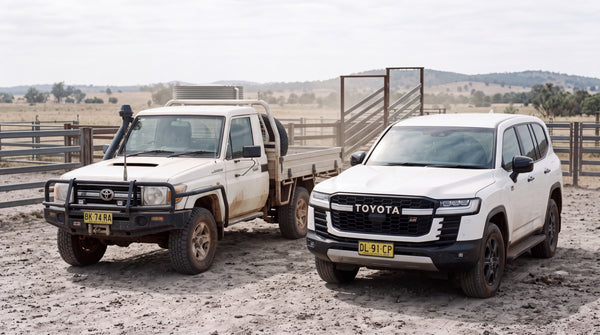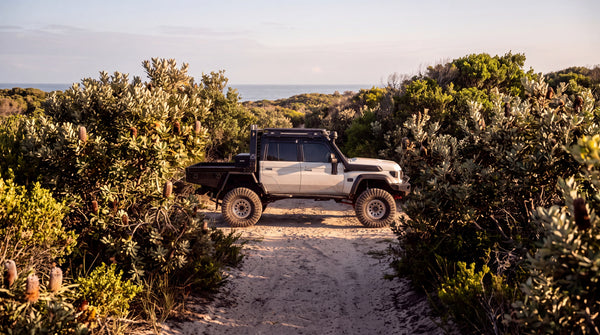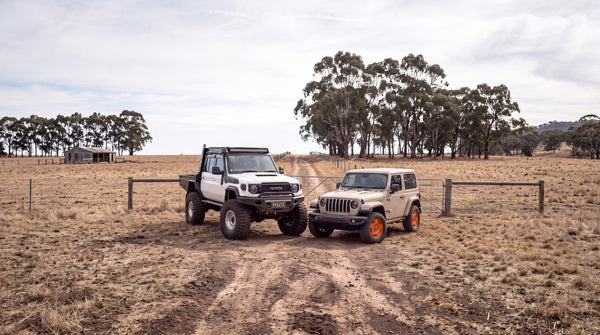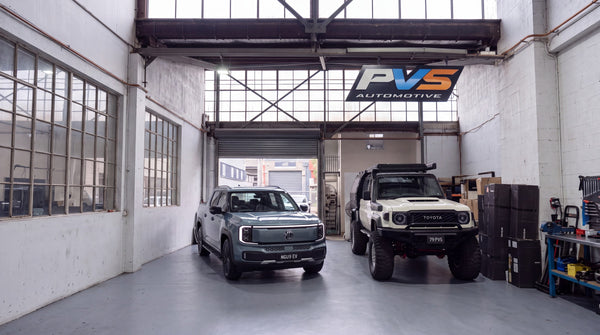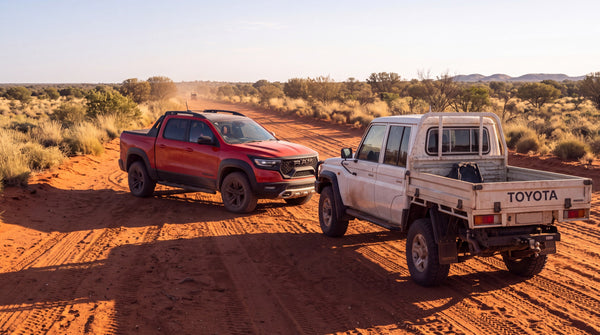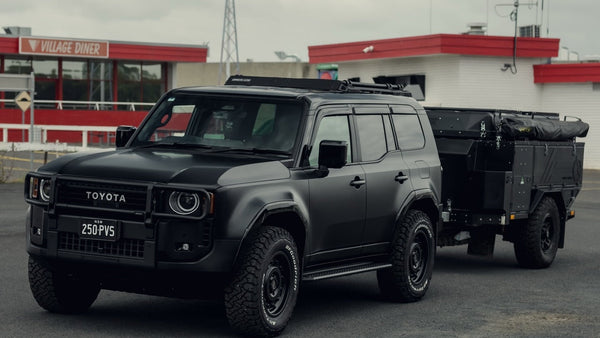



Every 70 Series wears a chassis code that tells you which engine sits under the bonnet and which body it rides on. Search for a replacement part, a headunit upgrade or seat covers and you hit a wall of alphanumeric codes. Toyota's system looks cryptic, but the logic is clean and consistent once you know the formula. Knowing your code saves time, prevents costly fitment mistakes and gives you a shorthand every wreckers yard, parts counter and 4WD forum speaks fluently.
The code is two parts joined together: an engine family prefix and a body-series number. Get those two right and you can cross-reference almost any component for a 70 Series, from filters and gaskets through to in-car electronics and interior trim.
At a Glance
- HZJ = 1HZ 4.2-litre naturally aspirated inline-six diesel, the long-serving 70 Series workhorse engine.
- VDJ = 1VD-FTV 4.5-litre turbo-diesel V8, introduced in 2007 and now discontinued in Australia.
- GRJ = 1GR-FE 4.0-litre petrol V6, found mainly in Gulf-market 70 Series variants.
- GDJ = 1GD-FTV 2.8-litre four-cylinder turbo-diesel, the current Australian range engine.
- Body numbers: 76 = wagon, 78 = Troopcarrier, 79 = cab-chassis (single and dual cab).
How Toyota builds the code
The engine prefix tells you the engine family. The number after it identifies the body style within that generation of the nameplate.
For the 70 Series those body numbers are 76, 78 and 79: the wagon, the Troopcarrier and the cab-chassis. Stack a prefix onto a body number and you have a full chassis code, so GDJ76, VDJ79, HZJ78 and so on.
HZJ: the 1HZ naturally aspirated diesel
HZJ means the 1HZ, a 4.2-litre naturally aspirated inline-six diesel that powered the 70 Series for years and built a fierce reputation for reliability. It's no powerhouse by modern standards. Its mechanical simplicity made it a favourite for remote touring, where engine complexity is a liability.
You'll see HZJ75 come up often when you're searching for older cab-chassis and ute-based variants, particularly in the secondhand and classic 4WD market. Parts availability stays strong, and the engine's longevity means plenty of well-maintained examples are still in daily use across rural Australia.
VDJ: the 1VD-FTV V8 turbo-diesel
VDJ belongs to the 1VD-FTV, a 4.5-litre single-turbo V8 diesel that arrived in the 70 Series in 2007. It quickly became the enthusiast favourite for its mix of torque and refinement.
The VDJ79, as a V8-powered cab-chassis, drew a loyal following among tradies and touring enthusiasts who wanted serious towing capacity without giving up off-road credibility. Toyota has since ended V8 diesel production, so VDJ variants are a finite and increasingly sought-after commodity.
If you're shopping for accessories or electronics for a VDJ79 or VDJ76, confirm that code with your supplier. Some components differ from the current GDJ equivalents.
GRJ: the 1GR-FE petrol V6
GRJ identifies the 1GR-FE, a 4.0-litre petrol V6. In the 70 Series it's fitted mainly to vehicles built for the Gulf region and certain export markets, not the Australian lineup. If you find a GRJ76 for sale here it has almost certainly been imported.
The GRJ is worth knowing because petrol-engined 70 Series vehicles have a small but dedicated following, and their parts fitment can differ from diesel variants in ways that catch buyers out.
GDJ: the current 1GD-FTV four-cylinder
GDJ covers the 1GD-FTV, a 2.8-litre four-cylinder turbo-diesel and the engine powering the whole current Australian 70 Series range. The GDJ76 wagon and GDJ79 cab-chassis replaced their VDJ counterparts, and that brought a new generation of electronics, updated cabin architecture and revised accessory fitment requirements.
Buying parts, headunits or steering wheel control interfaces for a new or recent 70 Series? GDJ is the code to quote. The current PVS Automotive 70 Series headunit range is built around GDJ fitment, and it keeps your steering wheel controls.
Why the code matters when you buy parts
Workshops and parts suppliers key fitment guides off chassis codes, because two vehicles that look identical can carry different wiring harnesses, dash configurations and mechanical mounting points depending on engine family.
A steering wheel control module calibrated for a VDJ may not read a GDJ's wheel button signals correctly. A headunit fascia cut for a pre-facelift HZJ dash may not sit flush in a GDJ. Quote your full chassis code rather than just "70 Series" and you get the right component the first time.
If you're not sure of your code, it's on the compliance plate in the engine bay and on your registration papers.
Quick reference: common Australian 70 Series codes
HZJ75 is an older naturally aspirated diesel cab-chassis, and HZJ78 is the Troopcarrier equivalent. VDJ76 is the V8 wagon, VDJ79 the V8 cab-chassis in single or dual cab. GDJ76 is the current wagon and GDJ79 the current cab-chassis. GRJ76 is the petrol V6 wagon, rare in Australia.
Keep that list handy at the parts counter and you'll spend far less time second-guessing what fits one of Australia's most enduring four-wheel drives.