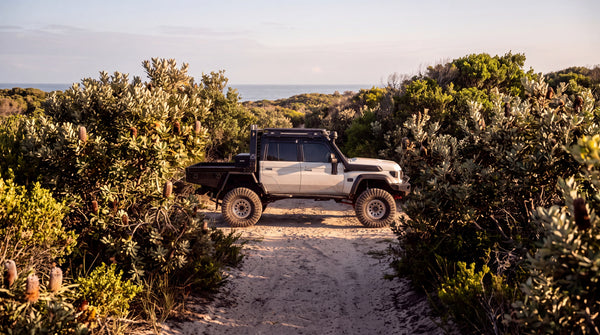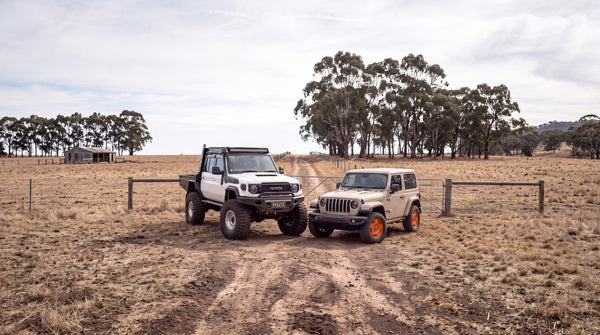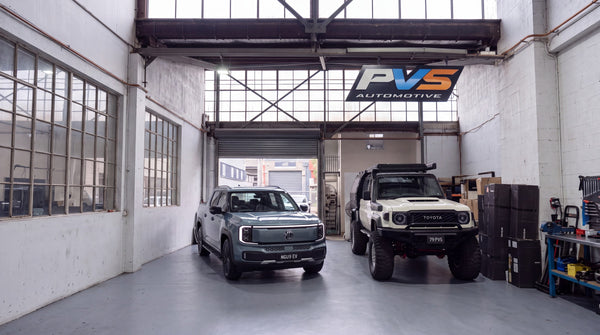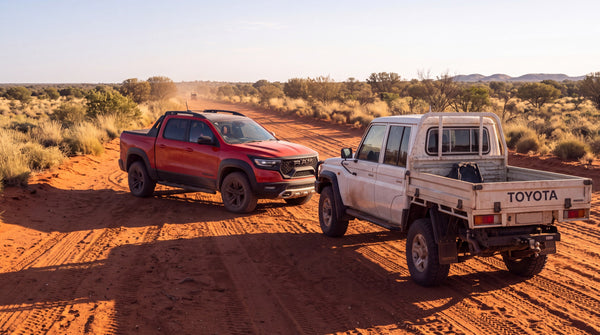



Ask anyone who tours the outback, runs a mine site or works in a remote community which vehicle they trust when the nearest town is 400 kilometres away, and you'll hear the same answer: the Troopy. Short for Troopcarrier, the 78 Series LandCruiser isn't glamorous. No air suspension, no panoramic sunroof, no massage function. What it has is a reputation for getting people home, built over decades of hard work on some of the harshest terrain on earth.
To see why the Troopcarrier means so much here, look at where it came from and what it's engineered to do. In an era of complex four-wheel drives, its simplicity is the whole point.
At a Glance
- The Troopcarrier is the long-wheelbase people-and-cargo body variant within Toyota's 70 Series family, currently sold in Australia as the 78 Series.
- Originally designed to transport work crews across remote terrain, hence the name Troopcarrier.
- From MY26, the fuel tank capacity moves from 180 litres to 130 litres to accommodate the AdBlue system, paired with the 2.8-litre automatic drivetrain.
- Heavily used across outback tourism, remote communities, the mining sector, and a booming pop-top camper conversion scene.
- Holds resale value exceptionally well, with strong used-market demand driven by its reputation for repairability and go-anywhere capability.
Built for work, adopted by everyone
The Troopcarrier name isn't marketing shorthand. It was built to carry troops, or more precisely, work crews. The long-wheelbase body was designed to move a lot of people and their gear across terrain that stops most vehicles cold.
Early Troopcarriers went into service with government agencies, pastoral operations and the military. In those places a mechanical failure isn't an inconvenience, it's a safety risk. That work-crew DNA never left. Your 78 Series carries the same philosophy: seat more people, carry more cargo, go further, and stay fixable in the field.
The outback's favourite workhorse
In Australia's remote communities the Troopcarrier isn't a lifestyle choice, it's infrastructure. Indigenous communities across the Northern Territory, Western Australia and South Australia rely on them for school runs, health patrols and freight.
Outback tourism operators run them day in, day out across track conditions most modern SUVs are never asked to face. On mine sites they move crews, because durability is a non-negotiable part of the buying decision. The Troopy doesn't turn up to that work as a compromise, it turns up as the answer.
The pop-top conversion scene has brought the Troopcarrier to a whole new audience over the past decade. Converters turn the wagon body into self-contained touring rigs, with elevating roof systems, integrated kitchens and sleeping setups that rival dedicated motorhomes. The appeal is obvious: you get 70 Series capability wrapped around a living space that can reach the places worth visiting. Apps like Newtracs and WikiCamps help a new generation of Troopy owners plan trips that needed a dedicated GPS unit and a stack of paper maps fifteen years ago, and the van-life community has taken to the platform wholeheartedly.
What the MY26 changes mean if you're buying
The MY26 update is the big one for anyone shopping now, and it changes both the drivetrain and the fuel system. The 2.8-litre automatic is the powertrain of choice, replacing the previous diesel and manual combinations for the Australian market.
The fuel tank matters more if you tour. It drops from 180 litres to 130 litres to accommodate the AdBlue system required for emissions compliance. That's a real cut to your raw range, so if you're planning remote travel you may need an auxiliary tank to keep the independence the Troopcarrier has always given you. The trade-off is cleaner emissions, and AdBlue is well-understood technology you can plan around with the right preparation.
Why you can still fix it yourself
The strongest case for the Troopcarrier in 2025 and beyond rarely makes a brochure: you can fix it. Not just at a dealership with specialised diagnostic gear, but in a paddock, with a decent toolkit and a working knowledge of diesel mechanics.
The 70 Series platform has always put mechanical accessibility first. The current 2.8 adds a DPF and AdBlue system that need proper diagnostics, but the axles, suspension and driveline are still the kind of hardware you can work on in a paddock. Parts are widely sourced. Independent mechanics across regional Australia know these vehicles inside out. When plenty of modern vehicles need a laptop to reset a battery, that counts for a lot.
Resale values back it up. Well-maintained Troopcarriers command strong prices on the used market, often holding value in a way that surprises buyers used to the depreciation curve of modern four-wheel drives. Real capability, low supply against demand and a hard-won reputation for longevity mean a Troopy is rarely a poor buy, even at what the new models cost.
An icon that earned its status
Automotive iconography is usually manufactured. Press releases, influencer campaigns and staged photography do the heavy lifting. The Troopcarrier earned its status a different way, by showing up when it mattered, in conditions most vehicles wouldn't survive.
That story runs from military and government origins through to today's touring conversions and remote community fleets. It's utility proving itself over time. The 78 Series isn't perfect, no vehicle is. But when the stakes are genuinely high, it's still the benchmark everything else gets measured against.