


Nissan has laid out the boldest product plan of its recovery: five new body-on-frame 4WDs inside the next two years, all riding on one shared ladder-frame family, all built at its Canton plant in Mississippi. That's a striking place to put the chips for a company that's just posted two of the heaviest losses in its history. Not crossovers, not a new EV sub-brand. Ladder-frame off-roaders.
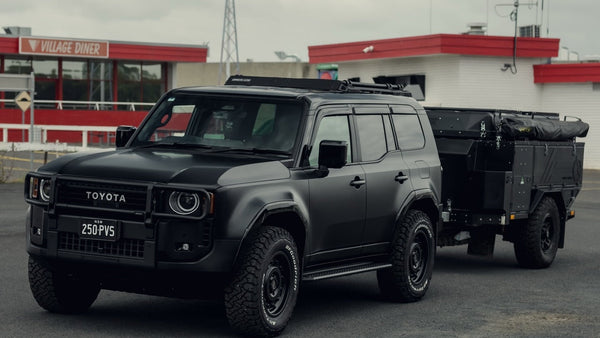
And the benchmark Nissan is measuring the family against is the vehicle every 4WD maker now has in its sights: the Toyota Prado.
At a Glance
- Five body-on-frame vehicles are coming inside two years: a revived five-seat Xterra, a three-row Nissan SUV, the next Frontier ute, and two-row and three-row Infiniti SUVs.
- The family shares about 70 per cent of its components forward of the B-pillar, including the platform, V6 and V6 parallel-hybrid powertrains, software and driver aids.
- Nissan calls the accelerated approach "China Speed": development lead times cut from 50 months to 30, with multiple models planned at once.
- The context is survival. Nissan posted a net loss of about A$7 billion for the year to March 2025 and A$4.7 billion the year after, and is trimming its global range from 56 models to 45.
- Nothing has been confirmed for Australia. These are US-built vehicles, and no Navara or Patrol implications have been announced.
One frame, five vehicles
Under CEO Ivan Espinosa, Nissan has reorganised around what it calls a family-planning structure. Roughly 80 per cent of its global nameplates now sit in three broad families, so related models get engineered together rather than one after another.
The body-on-frame family is the first big swing. Five vehicles will come off it: a five-seat SUV reviving the Xterra name, a larger three-row Nissan SUV, the next-generation Frontier, which is Nissan's Navara-sized ute for North America, and a pair of Infiniti SUVs in two-row and three-row form.
The engineering maths is the point. Around 70 per cent of components are shared forward of the B-pillar and underneath, covering the frame itself, V6 and V6 parallel-hybrid powertrains, electrical architecture, software, navigation and driver aids. Nissan is targeting a 40 per cent cut in vehicle development time and 20 per cent fewer unique parts across the family.
Hidemi Sasaki, deputy general manager of Nissan's product business division, says the difference this time is the timing: the first stage plans multiple models at once. The company is open about where the urgency comes from, pointing to Chinese makers following different rules and changing the game.

Why a company losing billions is betting on ladder frames
Nissan's net loss for the year to March 2025 ran to about A$7 billion, followed by another A$4.7 billion the year after. The response is a smaller, faster company: 56 nameplates trimmed to 45, development lead times cut from 50 months to 30, and investment spread across model families instead of single vehicles. "By revising the business scheme, we can reduce investment and efficiently engineer cars in a shorter period of time," Sasaki said.
What stands out is where the surviving investment is going. When a company in that much trouble picks the segments it can't afford to abandon, the answer tells you where the durable money is. Nissan's answer is body-on-frame 4WDs and utes, benchmarked against the 2026 Prado and BYD's Denza B5. Sports cars like the Z and a future GT-R sit outside the family structure. The frame family is the recovery plan.
What it means for you in Australia
Directly, nothing yet. All five vehicles are slated for US production, the article names no right-hand-drive plans, and neither the Navara nor the Patrol is mentioned. So don't read this as five new Nissans arriving in local showrooms.
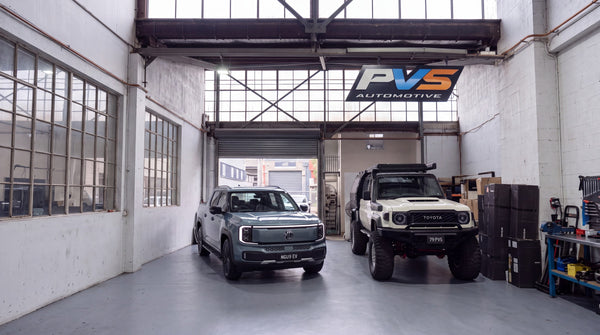
The signal matters more than the metal. This is now an unmistakable industry pattern: Ford has brought the Ranger Super Duty to market, Toyota has spun up an entire FJ line of compact ladder-frame LandCruisers, the Chinese brands are arriving with frame-based off-roaders of their own, and now Nissan is rebuilding itself around the same architecture. After two decades of the industry calling the separate chassis obsolete, everyone is quietly building them again.
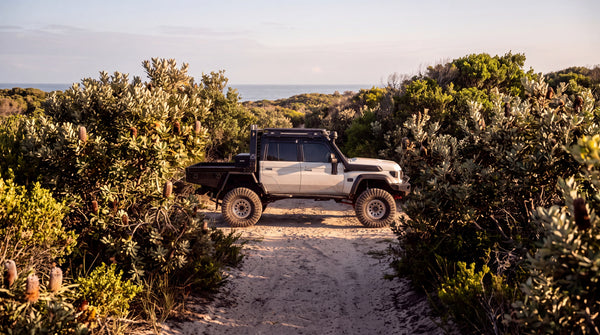
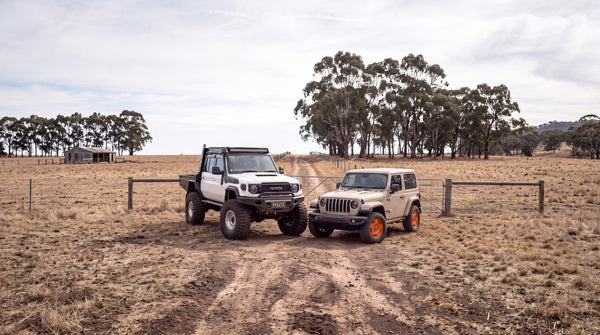
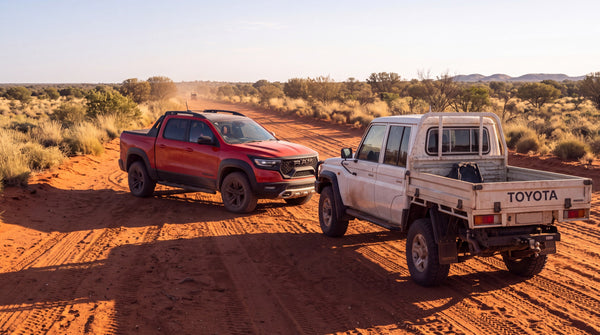
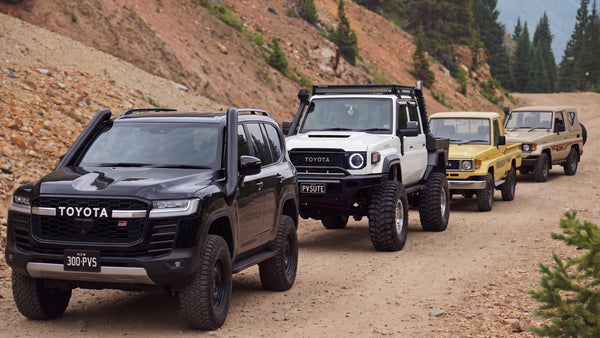
That's worth a moment of reflection from inside a 70 Series, because this is the argument Toyota's oldest model line never entered. The 70 Series has been body-on-frame since 1984 and it kept selling, through forty years of fashion cycles, while the rest of the market left and came back. Even in the ute conversation, where the HiLux and Navara trade blows every month, the 79 keeps holding ground on the strength of the very layout Nissan is now betting billions on.
The verdict
Nissan's plan is rational and probably necessary. If the execution matches the ambition, a revived Xterra and a family of frame-based SUVs will make the global 4WD market more interesting.
For you as an Australian buyer the takeaway is simpler. The format the 70 Series never abandoned is the one the world's carmakers are now racing each other back towards. It turns out the old way of building a 4WD wasn't a phase.