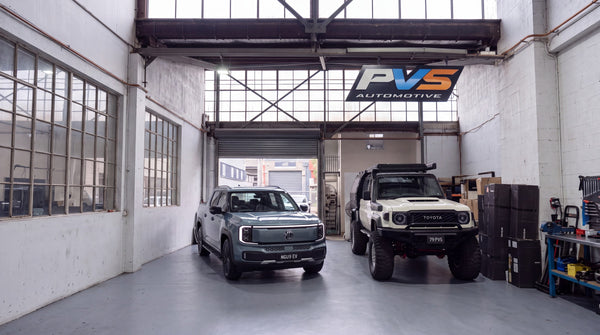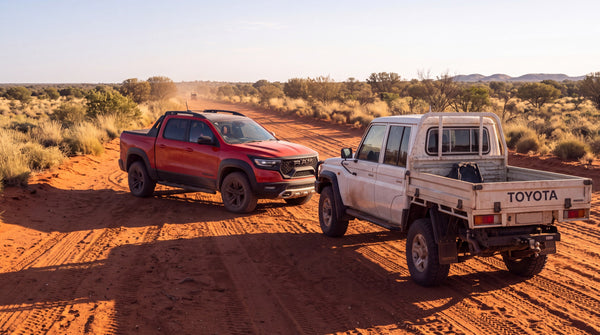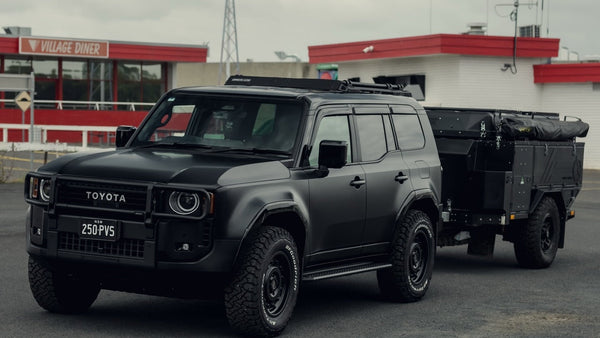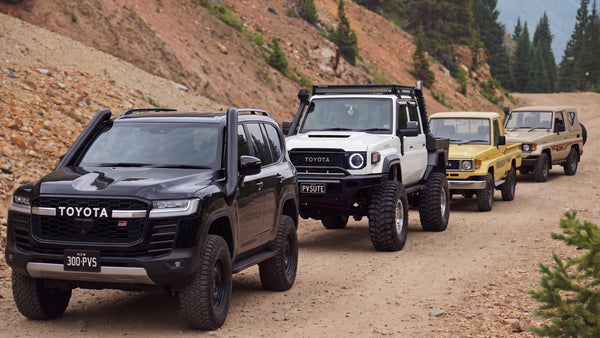



Ford Australia has created a new vehicle segment. The Ranger Super Duty isn't a worked-over Ranger with a badge upgrade, it posts towing and load-carrying numbers that until now belonged to the full-size American ute market, in a footprint that fits most suburban driveways. Ford, by its own admission, designed this vehicle with the 79 in its crosshairs.
Most of the argument so far has been fought on the spec sheet, which is the one contest the Super Duty was built to win. What the spec sheet doesn't show is what happens once the build starts and you need an engineer, a tray builder and a lift kit that's already been signed off on your exact chassis.
At a Glance
- Super Duty wins the numbers: 4,500 kg towing and 8,000 kg GCM, figures that exceed some full-size American pickups in certain markets.
- Super Duty wins the factory hardware: front and rear locking differentials and underbody protection standard, with larger tyres that open the door to legal 35-inch rubber subject to local regulations.
- Super Duty costs you the aftermarket: certified lift kits, GVM upgrade programmes, tray builders and long-range tank suppliers mapped to that chassis are in their infancy.
- The 79 wins on support: a 4-inch lift on 35-inch tyres is a parts-rich process with multiple reputable suppliers competing for the work.
- The 79 costs you the engine argument: the V8 is out of production and the current 2.8-litre diesel with AdBlue has attracted its share of debate among long-term owners.
The Super Duty wins the spec sheet and the driveway test
Credit where it's due. A 4,500 kg tow rating and an 8,000 kg GCM in a mid-size pickup body is a real engineering achievement, and it was conceived and developed in Australia for fleet owners, tradespeople, farmers and recreational tourers.
Anyone hauling a heavy camper trailer, a large horse float or serious work equipment now has a choice that didn't exist two years ago. The standard front and rear locking diffs, with proper underbody protection, aren't tick-box items. That's serious off-road hardware straight off the lot.
The range covers single-, double- and extra-cab chassis variants plus a double-cab pickup with a traditional tub, with XLT grades adding cabin comfort. If you run a fleet, carry heavy loads for a living, or want a quiet commute between the city and the track, it stacks up.
The 79 wins everything that happens after you've bought it
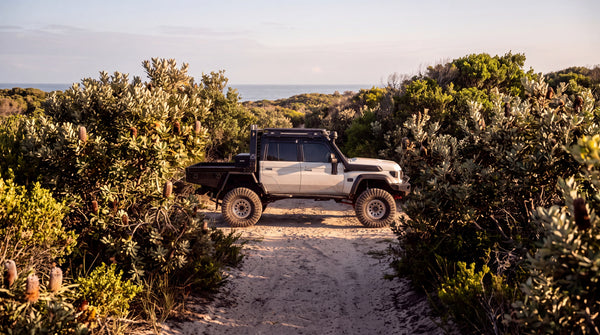
The 79 Series, and the broader Toyota platform under it, carries something no new entrant can replicate quickly: thirty years of aftermarket infrastructure built specifically around it.
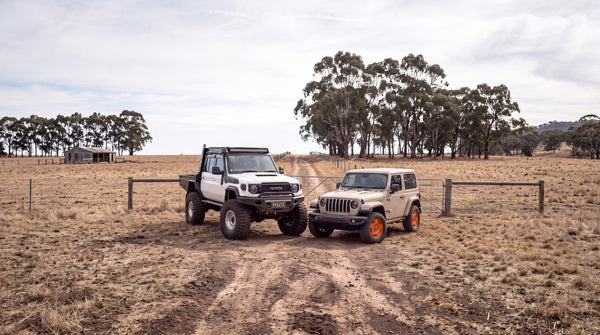
A 4-inch lift on 35-inch tyres is well documented on a 79, with multiple reputable suppliers competing for the work, and at that height it goes through engineering certification rather than bolting straight on. GVM upgrades are available through certified engineers who have done hundreds of them on this exact chassis. Tray and canopy fabricators design their products around 79 Series mounting points as a matter of course.
Snorkels, long-range fuel tanks, dual-battery systems and full interior rebuilds from the seat foam out sit on a parts ecosystem that spans every capital city and most regional towns. Break something in outback Queensland on a Saturday afternoon and your odds of sourcing or fabricating a fix locally are higher than for almost any other 4x4 on the market.
What the 79 costs you
The V8 70 Series is no longer in production, and the current 2.8-litre diesel with AdBlue has attracted its share of debate among long-term owners. Those are legitimate conversations and they won't be settled by loyalty.
The counterweight is that the 2.8 is tuneable, the chassis is proven, and the supplier network that grew up around the V8 has largely carried across. The engine changed. The ecosystem around it didn't.
The modification gap is real, not invented
The Super Duty will develop its own aftermarket over time. Ford's Ranger platform already has a meaningful modification scene, and the Super Duty benefits from that.
Right now though, the range of certified lift kits, GVM upgrade programmes, specialist tray builders and long-range tank suppliers mapped to the Super Duty chassis is in its infancy next to the 79 Series. Take a 79 from standard to a serious touring rig and you can call three suppliers this week, get three quotes, and have the work signed off by an engineer who has certified the same combination dozens of times. That pipeline doesn't exist for the Super Duty yet, and it matters when your build needs to be road-legal and warranty-sound.
The verdict we'll put our name on
If you need heavy towing in a mid-size body, want a modern cabin, and you're not planning a 10,000 km desert crossing with a heavily modified rig, buy the Super Duty. It isn't a gimmick, and writing it off because it wears a Blue Oval is brand tribalism that serves nobody.
If you're planning a serious build, buy the 79. It isn't the benchmark on factory specifications alone, it's the benchmark because of the engineers who know it, the parts that fit it, and the community refining builds on it since before many of its current owners had a driver's licence. The Super Duty has taken an enormous first step. Closing that gap is a decade-long project, not a model-year update.
If you see it differently, say so in the comments below, because this is exactly the argument this community should be having.