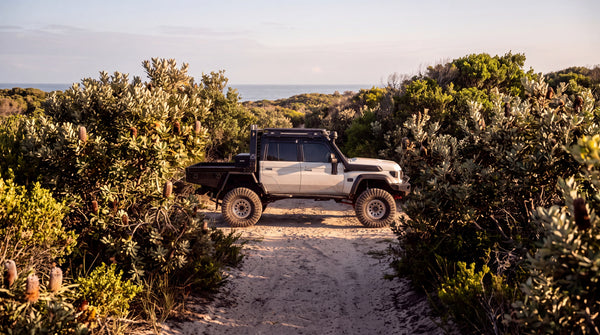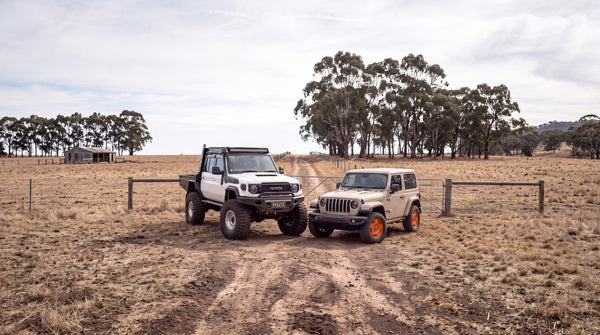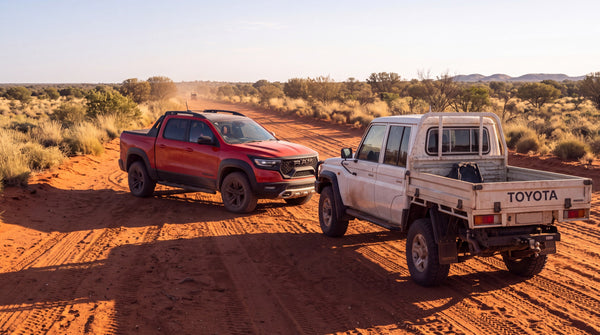



For more than four decades the LandCruiser 70 Series has been the default answer to one of Australia's bluntest questions: what do you put on a mine site, a cattle station or a fire trail when nothing else is good enough? That answer now has a louder rival. Ford Australia's marketing director Ambrose Henderson told media in May that the locally developed Ranger Super Duty, on sale since November 2025, outsold the LC70 across the first quarter of this year. It's a striking claim and it's been picked up widely. It's also a claim the available numbers can't fully prove, in either direction.
That matters to you if you're shopping for or running a 70 Series. The Super Duty was conceived here, engineered here and aimed squarely at this segment. If it's genuinely overtaking the 70 Series on volume, that's worth understanding. If the comparison is being presented in the most flattering light possible, that's worth understanding too, and right now both things are partly true.
At a Glance
- Ford's Ambrose Henderson claimed the Ranger Super Duty outsold the LandCruiser 70 Series in Q1 2026, the vehicle's first full quarter on sale.
- VFACTS records 1,287 LC79 utes delivered in Q1 2026, but Toyota reports all 70 Series wagons and Troop Carriers inside the 300 Series tally, so the real 70 Series family number is higher and unknown.
- Ford doesn't report Super Duty sales separately from the broader Ranger line, so no independent figure exists to verify or challenge the claim.
- The Super Duty launched in cab/chassis form only; ute (pickup) variants and the new XLT grade began reaching dealers in late May 2026, with further pent-up demand expected to follow.
- The 70 Series is sold here in four body styles including the five-door wagon and Troop Carrier; the Super Duty currently has no equivalent.
What Ford said, and what it didn't say
Henderson said at that briefing that the Super Duty delivered more units than the LC70 in Q1, and that it did so with the cab/chassis variant alone, before pickup models became available. He also said Ford had delivered "thousands" of Super Dutys since the November launch. That's where the verifiable detail stops.
Ford hasn't published a standalone Super Duty sales figure. The vehicle sits inside the broader Ranger line in Ford's VFACTS submissions, so the number Henderson is citing is internal data you can't cross-check. That isn't an accusation of dishonesty, it's standard practice for most makers with niche variants. It does mean the claim stands on Ford's word alone.
What VFACTS shows for the 70 Series
The 1,287 figure for the LandCruiser 70 Series in Q1 2026 comes from VFACTS and covers the LC79 ute body styles only. Toyota groups the 70 Series wagon (the 76) and the Troop Carrier (the 78) with the 300 Series in a combined LandCruiser tally of 2,857 units for the same period.
How many of those 2,857 are 76 wagons or Troopies rather than 300 Series stays unknown, because Toyota doesn't break the figure out. So the LC70 family is being measured at a fraction of its true volume when Henderson compares the Super Duty to a 1,287-unit ute count. Add an unknown slice of that 2,857 and the total 70 Series number rises by some amount, possibly a big one. Neither side of this comparison is fully visible in published data.
A new model against a 42-year-old platform
There's a reasonable expectation here worth stating plainly. A new model always attracts conquest buyers, early adopters and people who've waited years for the options to change. The Super Duty is genuinely new in a segment that's had essentially one serious answer for four decades. That novelty effect is real and the early volumes reflect it.
The 70 Series, meanwhile, is ordered by fleets, stations and government departments on replacement cycles that can stretch to a decade or more. Its Q1 number isn't a measure of enthusiasm. It's a measure of a tightly supply-managed production run from a factory in Japan that has never tried to compete on showroom volume. Toyota has at points had waiting lists past twelve months for the 70 Series, particularly after the 2024 update and again around the 2026 AdBlue changeover. A vehicle people wait a year to buy isn't losing the argument.
Where the Super Duty genuinely wins
None of that's a reason to dismiss the Ranger Super Duty. Ford built it in Australia for a reason and it fills gaps the 70 Series can't. Its payload and towing credentials are serious numbers aimed at exactly the buyers, fleet operators, tradies and heavy-duty agricultural users, who have historically bought 70 Series cab/chassis variants for rated capacity.
The Super Duty is also quieter on the highway, more sophisticated in its safety systems and easier to live with daily for families who still need it to earn its keep. If your use is mostly on-road with occasional dirt work and maximum payload, the Super Duty is a genuine answer. Pickup variants are only now reaching dealers in late May 2026, so the sales story through Q2 and Q3 will tell you more than Q1 alone.
What the 70 Series platform still owns
The argument for the 70 Series was never mainly about what it costs new or how many sell in a quarter. It's about what happens over the following ten to thirty years. Big suspension lifts and larger tyres are well-trodden territory on the 70 Series, with established GVM upgrade paths and a state engineering approval process, refined over two decades, for changes beyond the legal allowance.
Long-range tanks, dual-battery systems, canopies and trays built to suit the specific tub dimensions, snorkels with correct airbox positioning and interior rebuilds from basic to fully trimmed leather are all supported by an aftermarket that's had forty-plus years to develop specific solutions. Parts are available in Cairns, Kalgoorlie and Katherine, not just capital city fitment centres.
The five-door 76 wagon and the 78 Troop Carrier give you enclosed wagon and van-style bodies the Super Duty, which has no wagon body at all, can't match. An Everest Super Duty variant has been flagged in media reports as a possible future development, but it doesn't exist yet.
The defence angle and what it changes
Henderson's briefing touched on something beyond the civilian sales comparison. Ford has confirmed it's in early-stage conversations with defence and law enforcement organisations in North America and Europe about potential Super Duty contracts, and has been positioning the Australian-developed vehicle as a candidate for military procurement.
The logic is straightforward: allied militaries benefit from shared platforms, parts supply chains and training. If the Super Duty enters service with NATO-aligned forces, the case for Australian Defence Force adoption strengthens. That's a long way from a confirmed contract and Ford has been careful to say nothing is finalised. It's worth flagging because ADF vehicle tenders are exactly the kind of bulk contract that can move annual sales figures. The 70 Series has held defence and government fleet business in Australia for decades. That incumbency is real, but it isn't permanent.
The number to watch
The first genuinely useful comparison comes when VFACTS releases Q2 2026 figures with both cab/chassis and pickup Super Duty variants in market for a full quarter. If Ford keeps reporting internally rather than through public VFACTS breakdowns, the claim will still be unverifiable from the outside. What you can see is the 300 Series combined tally, and whether the wagon portion of that line is growing or shrinking. The 70 Series order book, which Toyota hasn't opened to public view, remains its own argument: people don't join a twelve-month waiting list for a platform that's lost the room.
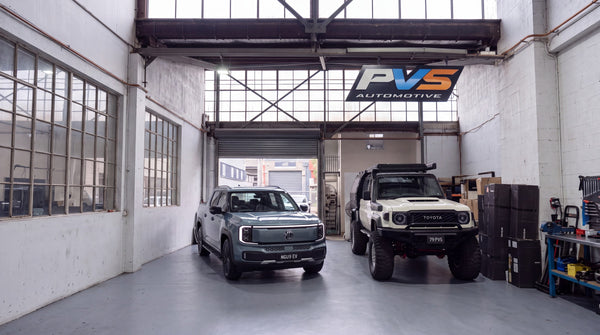
Ford's Q1 claim is plausible, isn't independently verifiable and tells only part of the story of a segment in real competition for the first time in a generation. Worth following closely. PVS Automotive stocks steering wheel kits, head units and interior trim for the 70 Series family if you're building yours out while you wait.