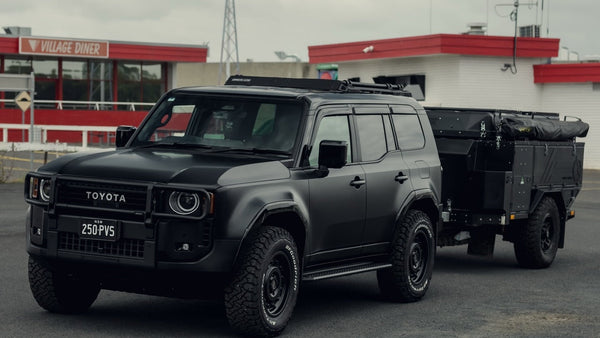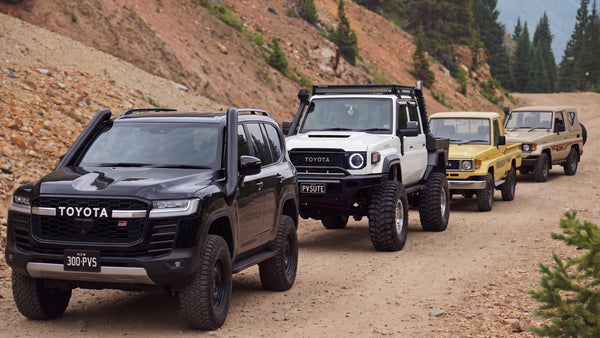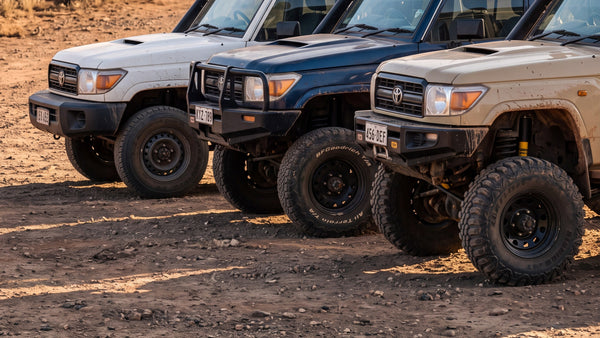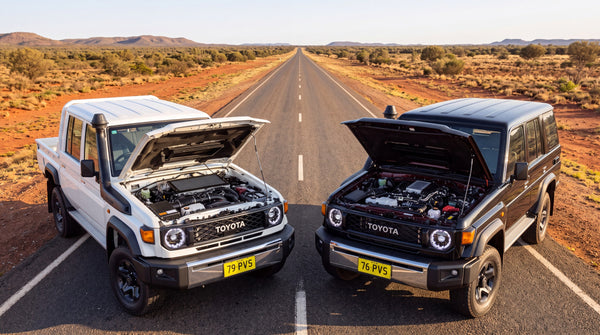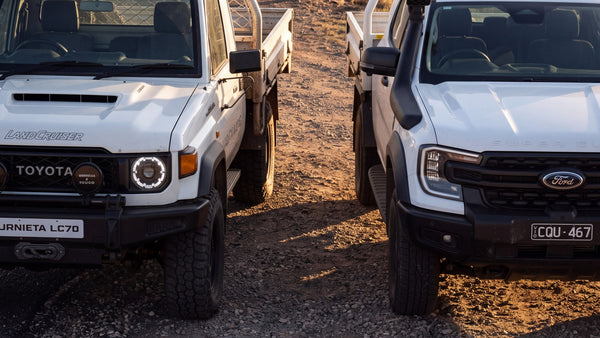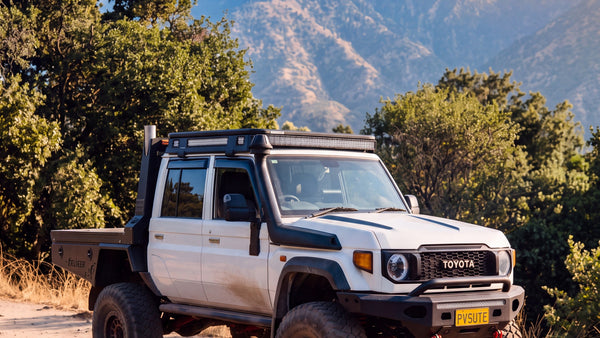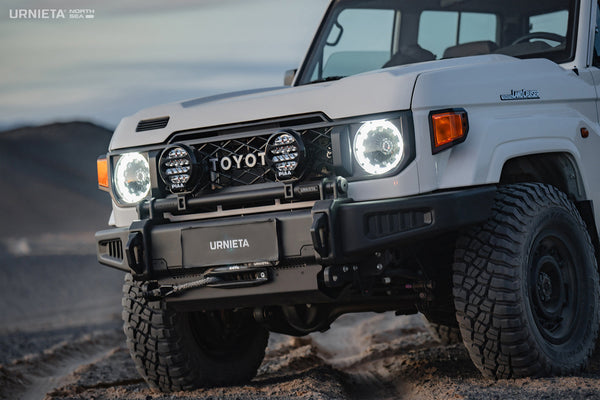



Toyota Australia has revealed a substantially revised LandCruiser 70 Series with two genuine firsts: a 4.5-litre V8 turbo-diesel engine and an all-new four-door wagon variant. The updated range goes on sale across Cab Chassis, Wagon and Troop Carrier body styles, all sharing a revised front end that Toyota says delivers a wider track and a more imposing stance.
The overhaul goes well past the new engine. Every model in the lineup gets a new grille, headlamps, front fenders and front bumpers, plus an engine immobiliser and a CD player with MP3 compatibility as standard fitment.
At a Glance
- New 4.5-litre V8 common-rail turbo-diesel produces 151kW at 3400rpm and 430Nm from 1200rpm to 3200rpm, replacing the previous six-cylinder diesel lineup.
- Power is up 23.7 per cent and torque is up 13.1 per cent over the outgoing six-cylinder turbo-diesel, with fuel economy also improving slightly.
- A four-door wagon body style joins the range for the first time, aimed at buyers needing dual work and recreational capability.
- Prices start at $53,490 (excluding on-road costs) for the Cab Chassis Workmate, a $1,440 or 2.8 per cent increase over the previous entry-level model.
- All models are available in Workmate and GXL grades, with Cab Chassis models also offering a mid-range GX grade.
The 32-valve, Euro IV-compliant V8 uses common-rail direct injection and an intercooler. It also carries a graphite-iron cylinder block, a first for Toyota, engineered to handle high combustion pressures while keeping weight and dimensions in check. Drive goes through a five-speed manual transmission paired with a two-speed transfer case and a part-time 4WD system with manual free-wheeling front hubs.
Toyota says the V8's torque curve is the flattest of any engine in its lineup. Peak torque of 430Nm arrives at just 1200rpm and holds all the way to 3200rpm, which suits the low-speed, high-load work the 70 Series usually does. Fuel use has improved despite the power gains: Cab Chassis models are rated at 11.5 litres per 100km on the ADR81/01 combined cycle, down from 11.7L/100km, and the Troop Carrier drops from 12.0L/100km to 11.9L/100km, the same figure the new Wagon is rated at.
The new Wagon body style seats five, with two front bucket seats and a three-seat rear bench. The Troop Carrier continues in three-seat or 11-seat Workmate configurations, plus a five-seat GXL variant. The Cab Chassis lineup keeps an extra mid-grade GX option you can't get on the other body styles.
Toyota Australia's senior executive director of sales and marketing, David Buttner, said the 70 Series had built its reputation over nearly 50 years in Australia. "By consistently delivering reliability and durability, as well as legendary off-road and towing capabilities, the LandCruiser 70 Series has maintained a loyal following that is both unique and enduring," Mr Buttner said. He pointed to the original FJ25 LandCruisers that worked on the Snowy Mountains Hydro-Electric Scheme in 1958 as the foundation of that legacy.
The Cab Chassis Workmate opens the range at $53,490 before on-road costs, a $1,440 premium over the outgoing entry-level six-cylinder turbo-diesel model.
If you already run a 70 Series, this is the biggest change the platform has seen in years: a factory wagon body you can buy off the showroom floor, and a V8 that pulls from 1200rpm.