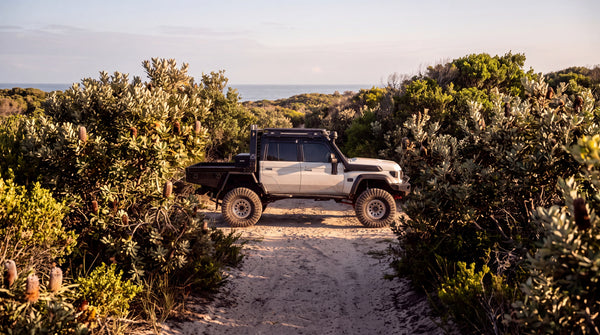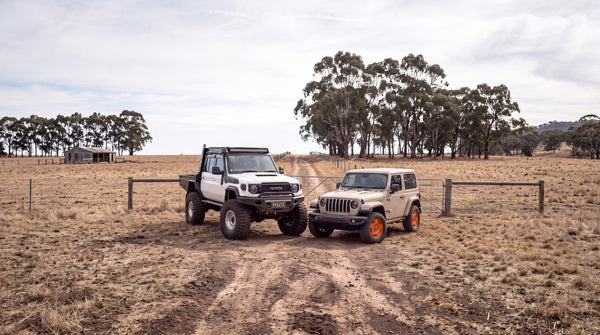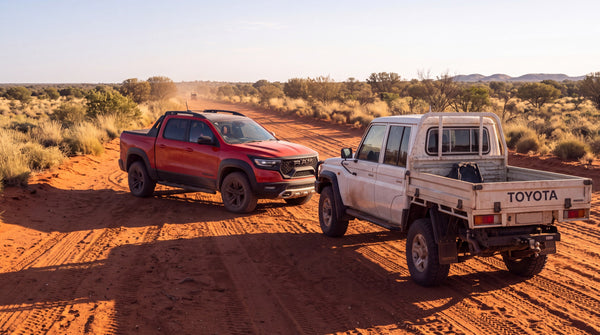



The 70 Series LandCruiser holds its value better than almost anything else on the used market, so sellers know exactly what they have. Whether you're shopping for a work ute, a long-range tourer or a mine-fleet hand-me-down, the second-hand pool is deep and easy to get wrong. Prices for late V8 examples have stayed firm since Toyota wound down that engine. Going in prepared isn't optional.
Here are the four broad eras of the modern 70 Series and the checks that matter most in each, plus the items worth ticking off whatever the build date. Use it as a starting framework. It doesn't replace an inspection by a qualified mechanic who can put the vehicle on a hoist before you buy.
At a Glance
- Four distinct eras: pre-2007 HZJ, 2007-2016 V8, 2016-2023 five-star refresh, and 2023-plus facelift with 2.8 auto.
- Late V8 prices are firm and unlikely to soften, so condition matters more than bargaining on price.
- Mine-service vehicles can carry very high idle hours relative to odometer kilometres, accelerating wear on key components.
- Aftermarket bar work and suspension lifts are common; the quality of that work varies enormously.
- Service history and chassis condition are non-negotiable checks on any era.
Pre-2007: HZJ and the 1HZ era
The pre-2007 vehicles, mostly powered by the naturally aspirated 1HZ six-cylinder diesel, are the simplest 70 Series you can buy. There's very little electronics to worry about, parts are plentiful, and a well-maintained one will run for a very long time. The catch is age. The youngest of these is now approaching twenty years old, and deferred maintenance has had decades to compound.
Check the timing cover and rocker cover for oil leaks. They're common and manageable, but they tell you how the vehicle has been looked after. Check the cooling system too, including the radiator and thermostat housing, and run the gearbox and transfer case through all ranges. Body rust deserves close attention at this age: the rear tub, the windscreen frame and under the chassis crossmembers. These were often worked hard on farms and in rural settings, so look for signs of heavy towing, bearing wear in the rear axle, and leaf springs that are sagging or cracked.
2007-2016: the V8 generation
The 70 Series got its biggest update in 2007, with a new front end and the 4.5-litre V8 single-turbo diesel (1VD-FTV), and the enthusiasm never really faded. This is what most buyers picture when they say "70 Series," and it's the largest pool of stock on the used market today.
The 1VD is a capable engine, but it rewards proper servicing. On higher-kilometre examples, look hard at injector condition. Injector failure can be an expensive repair, and smoke at idle or under load is worth investigating further. Vehicles built from the late-2016 update onward have a diesel particulate filter (DPF). Confirm it hasn't been deleted: a tampered emissions system creates compliance headaches and can point to a hard life for the drivetrain. Front-end wear matters on anything fitted with heavy steel bar work, which is a common modification on this generation. The extra weight accelerates wear in the steering, king pins and front wheel bearings, so budget for a thorough front-end inspection.
2016-2023: the five-star single cab era
Toyota's 2016 update took the 79 Series single cab to a five-star ANCAP safety rating and made the cabin noticeably more liveable. From 2022, autonomous emergency braking (AEB) was added to the options sheet, which makes those later builds desirable if you're covering long highway kilometres.
Used examples from this era are generally younger and lower in kilometres, but first owners tended to fit them out enthusiastically. Look closely at any aftermarket electrical work, including auxiliary and dual battery systems and lighting wiring. Poor installs cause intermittent faults and battery drain that take hours to chase down. Check that any suspension lift used quality components and that the alignment was set correctly afterwards.
2023-plus: the facelift and the 2.8 auto
The 2023 facelift was the biggest update the 70 Series had seen in years: a new 2.8-litre four-cylinder turbo diesel, an automatic transmission and a much more modern interior. These are the closest to current production and priced accordingly. Used stock is limited, and most examples will have relatively low kilometres.
The 2.8 auto feels genuinely different to the V8 manual. If you're used to the older drivetrain, drive one back to back before you commit. The modern cabin does bring better connectivity and more driver aids, which matters if the vehicle doubles as a daily driver.
Checks that apply to every era
Some checks apply whatever generation you're looking at. Start with a full service history: a 70 Series with a complete record is worth paying a premium for. Then get underneath. Inspect the chassis rails, crossmembers and diff housings for rust, cracks near weld points and signs of straightening after an off-road hit. Tow hitch wear and ball mount condition hint at a hard towing history.
Mine-service vehicles deserve a special mention. One that has spent time on a mine site can show a modest odometer reading but very high engine hours accumulated at idle. That ages the motor, turbo and cooling system far faster than highway kilometres do. If the seller can't account for where the vehicle has worked, ask for an engine hours reading where it's available. Last, judge the aftermarket gear as a whole: a tidy build with quality components adds real value, while a cobbled-together fit-out can cost more to sort out than it's worth.
What pricing looks like in 2026
The end of V8 production has put a floor under late-model 1VD pricing, and it shows little sign of giving way. If you're hoping to negotiate a bargain on a clean, high-spec V8, you'll likely be disappointed. Put your energy into condition and history instead of price. A vehicle with a full service record, a clean chassis and tidy aftermarket work is worth the asking price. One without those things is a risk at any number.
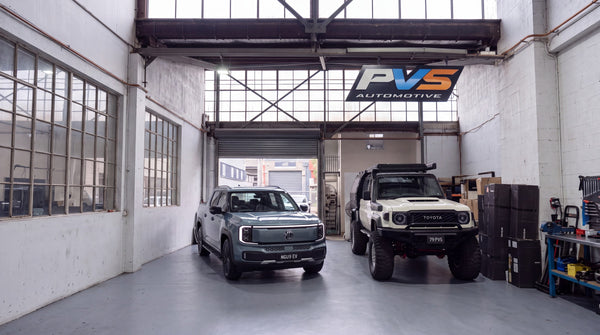
Once you've found the right one, think about how you'll set it up. The 70 Series aftermarket in Australia is mature and well developed, covering everything from head unit upgrades to interior trim. PVS Automotive stocks 70 Series compatible accessories, including wireless steering wheel control modules and interior upgrades, so you can bring the cabin of an older vehicle closer to modern expectations without losing its character.