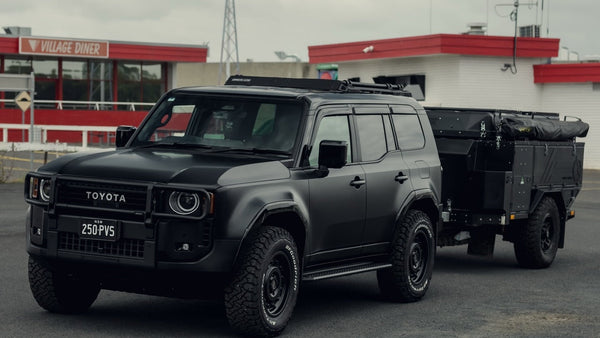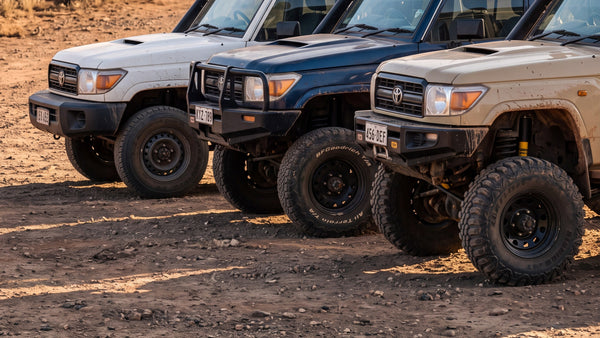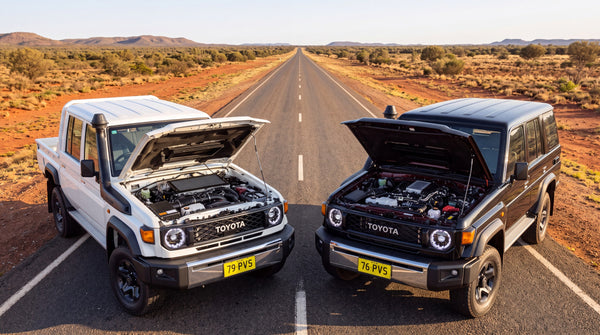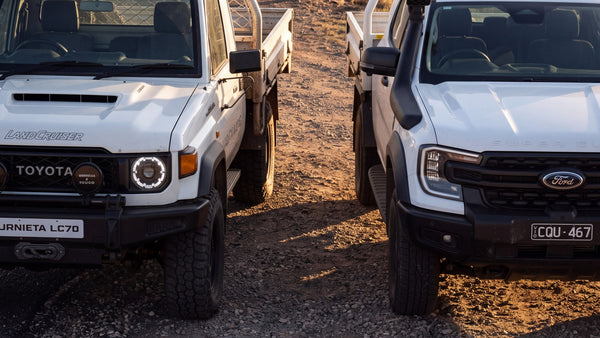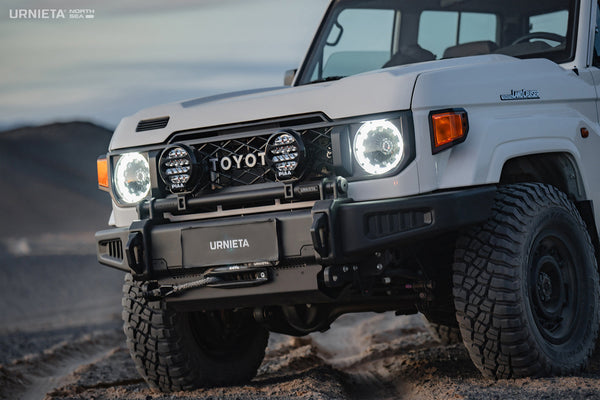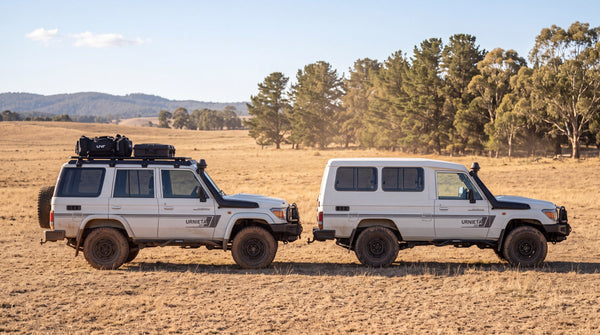



GVM and payload sit quietly on your compliance plate until something goes wrong, and on a 79 Series LandCruiser the margins get tight fast. Bolt on a bull bar, a tray and a drawer system and the numbers move quicker than most owners expect. Knowing your LandCruiser's payload matters as much as knowing its towing capacity.
Here's what the numbers mean, where the 79 sits legally, and what you can do if you run out of numbers before you run out of gear.
At a Glance
- GVM is the maximum legal loaded weight your vehicle can be at any point on a public road.
- Payload is GVM minus kerb weight, and accessories eat into it faster than most owners expect.
- Relevant 70 Series variants sit at a 3,510 kg GVM, which brought them into scope of Australia's extended Euro VI emissions rules from 1 November 2025.
- GVM upgrades are available via engineering certification, either pre-registration or post-registration depending on your state.
- Always engage a certified automotive engineer for a GVM upgrade: this isn't a DIY exercise.
What GVM actually means
Gross Vehicle Mass is the maximum loaded weight your vehicle is legally permitted to be on a public road. It covers everything: the vehicle itself, fuel, passengers, cargo, accessories, a loaded canopy, a drawer system full of recovery gear, water jerry cans, the lot. The manufacturer sets that number and it's stamped on your compliance plate. It isn't a suggestion, and it isn't a starting point for a chat with a weigh bridge inspector.
On relevant 70 Series variants, that figure sits at 3,510 kg. That exact threshold is what placed those variants within scope of ADR 80/04, Australia's Euro VI heavy vehicle emissions rule, which applied to all new models from 1 November 2025. The 3,510 kg GVM put them into a regulatory grey zone that prompted plenty of discussion across the 4WD community earlier in 2025.
Payload: where the maths gets uncomfortable
Payload is the simpler of the two, and it's where most owners get a shock. The formula is straightforward: payload equals GVM minus kerb weight. Kerb weight is the mass of the vehicle as it leaves the factory, with a full tank of fuel but no occupants or cargo.
On paper that sounds like plenty of room. The accessory list on a typical touring or work-spec 79 Series tells a different story. A common build looks like this:
- Steel bull bar with integrated LED light bar: 40 to 60 kg
- Winch: 25 to 35 kg
- Steel tray or canopy: 150 to 300 kg depending on construction
- Drawer system: 40 to 80 kg
- Two 20-litre water jerry cans (full): 40 kg
- Dual battery system: 30 to 50 kg
- Two adult occupants: approximately 150 kg
Add that up conservatively and you're at 475 kg or more before a single item of cargo, a dog or a bag of tools goes in. On a vehicle where the stated payload might be 700 to 900 kg depending on configuration, you can see how quickly the buffer disappears.
Why this matters beyond a fine
Running overloaded isn't just a traffic offence. An overloaded vehicle handles differently, brakes less effectively and stresses components that weren't engineered for that load. More to the point, an insurance claim from an incident in an overloaded vehicle can be declined outright. Your insurer's assessors will check, and a weigh bridge slip or a compliance plate photo from the scene is all the evidence they need.
GVM upgrades: your options
The 79 Series chassis is well regarded for its engineering robustness, and the aftermarket GVM upgrade industry in Australia is mature and regulated. A GVM upgrade certifies your vehicle to operate legally at a higher maximum loaded weight, usually through upgraded suspension components and the engineering sign-off that goes with them.
You have two broad pathways. The first is pre-registration modification, where a federal approval is obtained before the vehicle is first registered. That can give you a cleaner administrative outcome, and it's worth looking at if you're buying new and planning a full accessory build from day one. The second is post-registration modification, handled at a state level, with an approved person or licensed vehicle certifier signing off on the work after installation.
The process and approved suppliers vary by state, so engage a certified automotive engineer from the outset. You can't self-certify this one, and a receipt from a parts supplier won't do it. The engineering certificate needs to stay with the vehicle and be noted on your registration documentation.
Before you upgrade anything
Get your vehicle to a public weigh bridge and record its actual kerb weight with your standard accessories fitted, before you spend a dollar on a GVM upgrade. Factory kerb weights are measured under controlled conditions and may not match your real build. With an accurate baseline you can work out how much payload headroom you've got, and whether a GVM upgrade is genuinely needed or whether a smarter accessory choice sorts it instead.
If an upgrade is the right call, the money is well spent. A correctly certified 79 Series with the right GVM upgrade gives you legal certainty, a valid insurance position and the confidence to load up for the work or the trip you bought it for. That's worth a lot more than the cost of the paperwork.