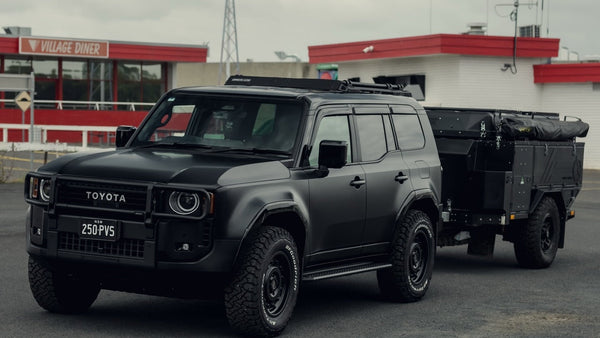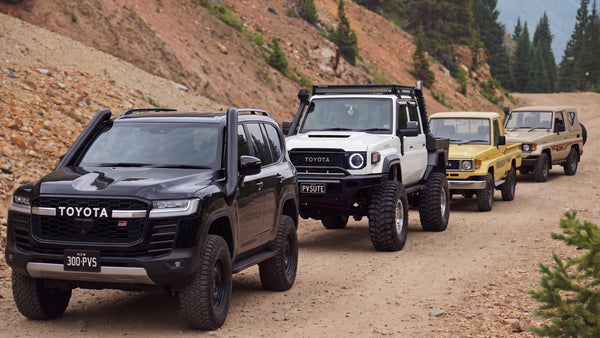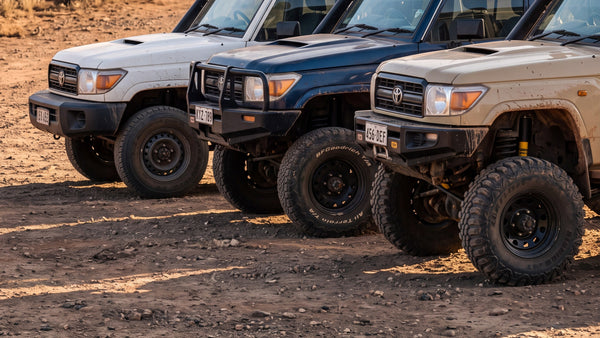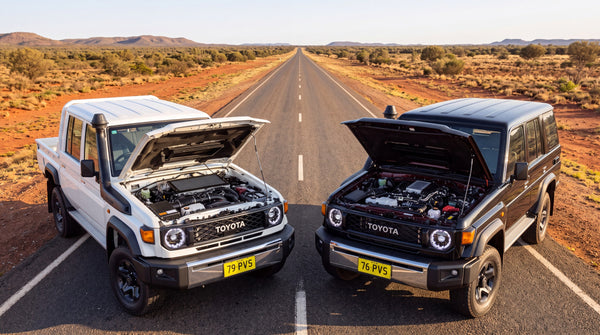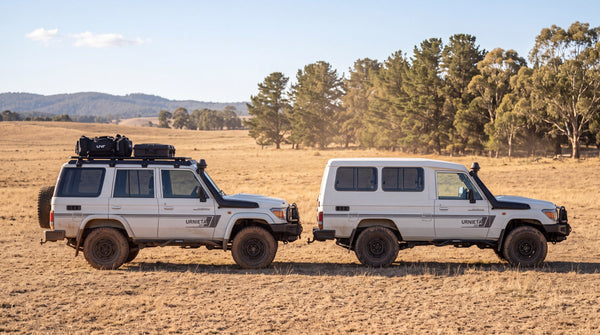



Toyota sells a three-door 70 Series you can't buy here. If you've spent time in the 70 Series community, you already know the nameplate covers a much wider family than the 76 wagon, 78 Troopcarrier and 79 single and dual-cab utes you can walk into a dealership and buy. Versions of this platform sell across the Middle East, South America and parts of Asia that most owners here have never seen in the metal. A new Toyota video, featuring LandCruiser chief engineer Masaya Uchiyama and Dakar Rally driver Takamoto Miura, has put one of the most intriguing of those back in the spotlight: the short wheelbase, three-door 70 Series. Three of them appear in the video, and the one everybody stopped on was the soft-top. Its windscreen unlatches and folds completely flat onto the bonnet, because a station hand throwing a lasso from a moving vehicle doesn't want a windscreen in the way. That one detail tells you more about who this vehicle is built for than any spec sheet will.
Want the wider picture on the regional 70 Series builds made around the world? Read our earlier piece on LandCruiser 70 Series worldwide and regional variants. This one sticks to the SWB and what that compact footprint means in practice.
At a Glance
- The showpiece of the video was a soft-top convertible. Its windscreen unlatches and folds flat onto the bonnet, there's a roll-over structure behind the front seats, and side-facing rear benches take capacity to seven.
- The SWB 70 Series rides on a 2,310mm wheelbase, only about 60mm longer than a three-door Suzuki Jimny and well short of the LandCruiser FJ's 2,580mm.
- Toyota showed three builds: a no-frills commercial hardtop, a lifestyle-spec wide-body hardtop, and the soft-top.
- Roughly 90 percent of SWB production is exported to the Middle East, with the balance going to select South American and Asian markets.
- Chief engineer Masaya Uchiyama said there are no immediate plans to add the SWB to the Japanese lineup, though he made no secret of wanting one there himself.
- It isn't sold in Australia and Toyota hasn't given any indication that will change.
What the 2,310mm wheelbase changes
At 2,310mm, the SWB 70 Series is a compact machine by modern standards. That's only around 60mm longer than a three-door Suzuki Jimny, and noticeably shorter than the classic LandCruiser FJ's 2,580mm wheelbase. That tight measurement cuts both ways.
The short wheelbase improves the breakover angle, the angle that decides whether the belly grounds out cresting a sharp ridge or rock feature. In technical terrain, the boulder fields and steep gully crossings you find across the Middle East and parts of South America, that breakover is worth more than almost any aftermarket modification. The turning circle tightens a long way too. That makes it far easier to place in narrow tracks, yards and dense scrub, where a long-wheelbase vehicle turns a three-point turn into a ten-point one.
The trade-off is just as plain. A shorter wheelbase means a shorter load area, so you carry less. For extended touring, that cut in cargo and water capacity is a real constraint. If you load a 79 Series dual-cab for a month on the Gibb River Road or across the Simpson, you're used to using every cubic centimetre of tray and interior space. The SWB doesn't offer that, and that's an honest read of what it was designed for, not a criticism.
Three very different builds
Toyota's video showed the SWB in three distinct specifications, which tells you how wide the intended use cases run.
First was a black narrow-body hardtop built squarely for work: steel wheels, a snorkel, manual wind-up windows and vinyl trim throughout. No frills, easy to hose out, built to run hard in commercial fleets. That's the spec police and security operators across the Middle East typically run, where the short wheelbase and tight turning circle matter more than passenger comfort or cargo volume.
Second was a wide-body hardtop in a sand finish, fitted with guard flares, power windows, leather and suede interior trim and a multimedia screen. That one's a lifestyle and patrol vehicle for buyers who want the capability of the short wheelbase without giving up comfort. It's closer to what 70 Series owners here expect from the platform, in a dramatically shorter package.
Third, and the most striking, was the soft-top convertible. The windscreen doesn't just tilt: it releases and folds completely flat onto the bonnet. There's a roll-over structure behind the front seats, and side-facing bench seating takes capacity to seven. Toyota noted in the video that the fold-flat windscreen is particularly favoured on cattle stations, where workers throw a lasso from a moving vehicle and need nothing in the way. It makes immediate sense once you hear it, and it's a reminder that the 70 Series family has always been built around specific working demands rather than marketing demographics.
Who it's actually built for
The buyer profile is genuinely different from the long-wheelbase variants you know. Police patrol units, cattle station operators in tight terrain, and government and utility fleet buyers in the Middle East account for the bulk of demand: roughly 90 percent of SWB production is exported to that region alone, with the balance going to select South American and Asian markets.
For those operators the physics work out. Better breakover, a tighter turning circle, a narrower overall footprint in some configurations, all of it makes the SWB the right tool. The trade-off in load space and touring range doesn't matter when the vehicle works a defined route or patrol area instead of being loaded for a remote expedition.
If you're the typical Australian 70 Series buyer weighing long-range fuel capacity, tray dimensions and carrying gear for weeks at a time, the SWB trades poorly. That's not a failing of the vehicle. It's optimised for a different set of priorities, and it does that job very well.
If you're hoping to buy one here
The SWB LandCruiser 70 Series isn't available in Australia. Uchiyama said in the video there are no immediate plans to add it to the Japanese lineup either, though he made no secret of wanting one there himself. Toyota hasn't given any indication it'll ever be offered here, and it would be irresponsible to speculate otherwise. Know it as part of the broader 70 Series story, not as something to plan a build around.
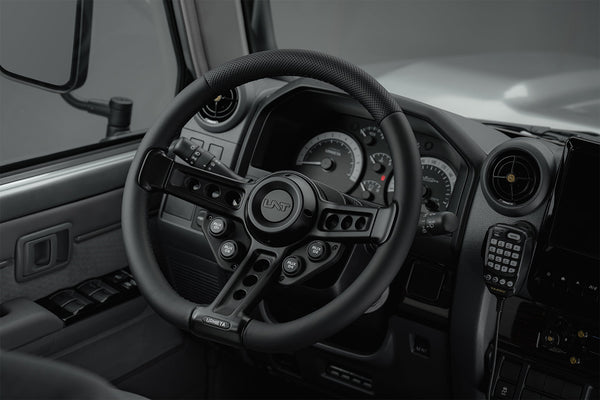
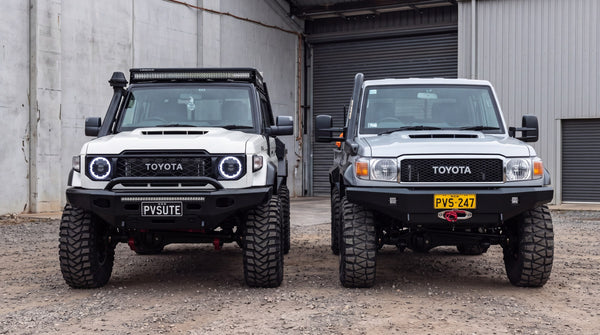
The platform that matters to you here is the 76 Series wagon, the 78 Series Troopcarrier and the 79 Series single and dual-cab ute. Our fitment work at PVS Automotive is built around those, covering steering wheel upgrades, interior and technology accessories designed for the vehicles actually sold here.