


Ford has confirmed a mid-cycle reset for the Ranger and Everest from the 2026.5 model year. The 2.0-litre bi-turbo four-cylinder diesel is retired, replaced by a revised single-turbo version of the same capacity. To bridge the power gap, Ford has made its 3.0-litre V6 diesel available across every variant in both ranges, at roughly six to seven thousand dollars over the four-cylinder. That pricing puts the Ranger and Everest squarely in the same conversation as the LandCruiser 70 Series, and it's a conversation worth having honestly.
If you own a 70 Series, the instinct might be to shrug. The numbers say look closer. A Ranger XL Double Cab Pickup with the new single-turbo now opens at just over fifty thousand dollars. A Wolftrak, the new nameplate sitting between XLT and Wildtrak, comes in at just under seventy-one thousand with the V6. A Wildtrak V6 is the same price. A Platinum V6 sits at nearly eighty-one thousand dollars. Those aren't budget numbers, and they sit alongside or above the entry points for the 70 Series wagon and dual-cab ute. At that money the comparison is a fair one.
At a Glance
- The 2.0-litre bi-turbo diesel is gone from both the Ranger and Everest: Ford cites forthcoming emissions standards as the reason for its removal.
- The replacement single-turbo 2.0-litre diesel is claimed to produce 125kW at 3500rpm and 405Nm between 1750 and 2500rpm, and gains a timing chain, steel pistons and a revised injection system.
- The 3.0-litre V6 diesel is now available across every Ranger and Everest 4x4 variant, priced at approximately six to seven thousand dollars above the four-cylinder equivalent.
- All Ranger and Everest variants move to a 10-speed automatic transmission; the previous six-speed is discontinued alongside the bi-turbo engine.
- A new nameplate, the Wolftrak, joins the Ranger range as a double-cab-only model offered exclusively in Traction Green, priced at $70,990 with the V6 diesel.
What Ford has actually done here
Dropping the bi-turbo isn't purely a business decision. Ford has said it's an emissions compliance issue, and the revised single-turbo reflects real engineering work rather than a detune. The cam belt that ran in oil is replaced by a timing chain, alloy pistons give way to stronger steel units, and the injection system has been updated throughout.
On paper you get less peak torque than the bi-turbo, with better durability and cleaner running over a longer service life. Whether that difference shows up on long highway runs or loaded towing is something the road tests will settle.
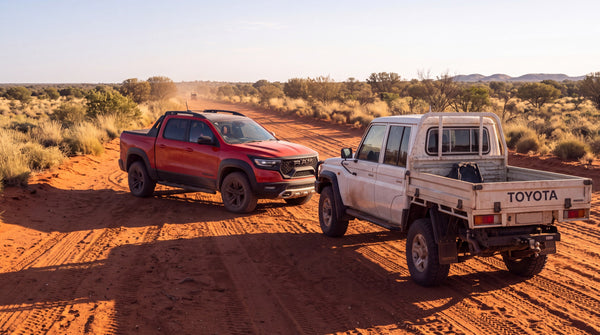
Spreading the V6 across the range is the bigger change. It used to be reserved for upper-spec variants, and now you can order the 3.0-litre diesel in an XL cab-chassis at $52,100. If you're on the tools or running a property, need the pulling capacity and don't want to pay for interior luxury, that's genuinely useful. The Tremor is now a regular production model rather than a limited run, with Bilstein suspension, General Grabber all-terrain tyres and increased ride height, while the new Wolftrak targets buyers who want a distinctive look for less than a Wildtrak or Tremor. On the Everest side, the Ambiente and Trend entry grades give way to a single Active model, which simplifies the lower end of the wagon range.
Where the 70 Series sits in this
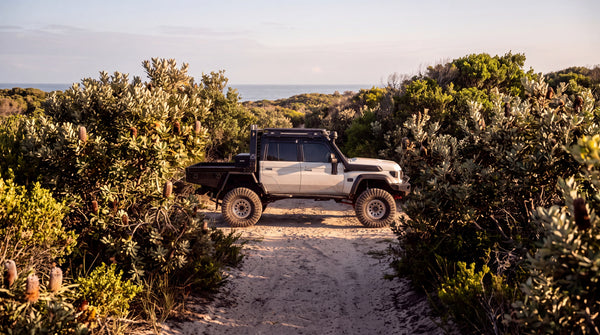
The LandCruiser 70 Series doesn't compete on refinement, technology or commuting comfort, and it never has. The cabin is honest to the point of austerity, the 2.8-litre four-cylinder diesel with AdBlue asks for attention that a V6 Ranger doesn't, and the infotainment comparison isn't flattering. The Ford, in Platinum or Wildtrak trim especially, is more sophisticated to live with every day. That's not a concession, it's just true.
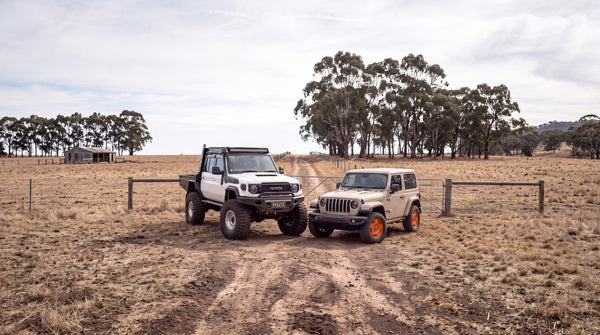
What the 70 Series gives you instead is a different kind of maths. The aftermarket for the GX, GXL and Workmate platforms in Australia is thirty-plus years deep. A four-inch lift on 35-inch tyres is a known quantity, with lift kits, extended brake lines, castor corrected radius arms and alignment specs documented and on the shelf. A GVM upgrade, if you need to carry more legally, is straightforward from multiple suppliers.
Tray conversions and canopy builds are so common that fabricators price them from stock templates. Long-range fuel tanks from the major manufacturers are catalogued items. Dual-battery and auxiliary power setups have been engineered for the 70 Series chassis for decades. Snap a CV in far western Queensland on a Sunday and the parts exist somewhere within reach. The Ford V6's aftermarket is growing, but it isn't the same depth of ecosystem, and that gap matters most when you're furthest from help.
The V8 70 Series is now out of production. The 1VD-FTV is no longer being built, and while the 2.8 GD-6 with its AdBlue system carries the nameplate forward, plenty of buyers watched the V8 go and haven't made peace with the replacement. For them, the question of defecting to a well-equipped Ranger V6 is live and genuine. The Ford will be quieter, smoother and likely cheaper to service in the short term. The LandCruiser will hold its value harder, absorb more punishment over more years, and take a depth of modification the Ranger can't match today.
The honest conclusion
Buying a work ute for mixed highway and suburban use, with strong towing and real daily-driver comfort? The Ranger V6 in XLT or Wildtrak specification is a serious proposition, and the new pricing structure makes it more accessible than before. The Tremor's factory suspension and all-terrain tyres give it off-road credibility that earlier versions lacked.
Building a vehicle to go somewhere genuinely remote, carry a serious load, live on corrugated station tracks for months and still be running in fifteen years? The 70 Series remains the answer the numbers and the culture keep pointing back to. The Ranger V6 is excellent at what it does. The 70 Series platform was built for something different, and no mid-cycle refresh changes that.
Make the argument in the comments. Which engine, which platform and which kind of ownership fits what you actually do? At these prices, nobody is making a casual decision.