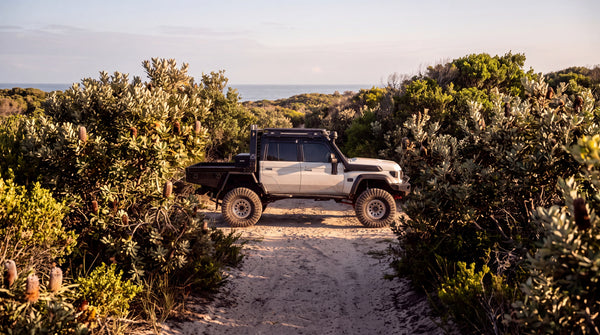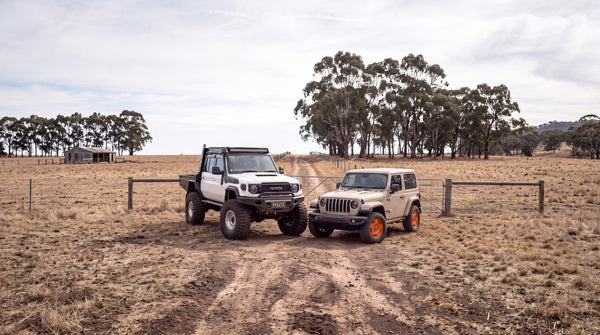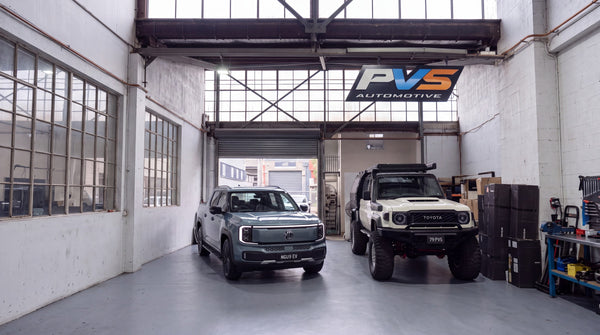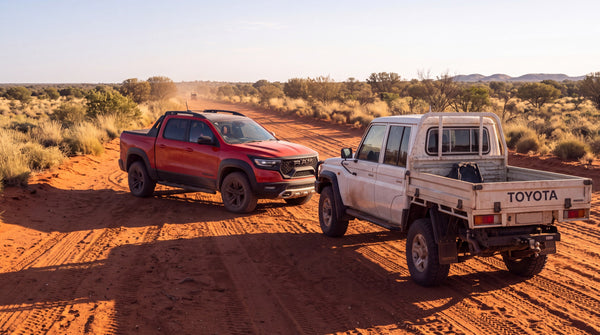



JAC Motors Australia has confirmed pricing for the Hunter PHEV ahead of a planned August 2026 showroom arrival. You get two variants: the Hunter Pro at $49,988 plus on-road costs, and the better-equipped Hunter X at $54,844 plus on-road costs. Those figures put the Hunter in direct conversation with the LandCruiser 70 Series range, where the GXL dual cab, the GXL wagon and the WorkMate troopy all sit in territory buyers will cross-shop on a spreadsheet. The question worth asking is whether a combined 360kW and 1010Nm of PHEV torque is a real threat to a platform that's been the benchmark for Australian working four-wheel drives for more than four decades.
JAC says the Hunter has completed over 100,000km of local testing, covering towing, payload, hot-weather durability, and both sealed and unsealed road work. The local development programme was overseen by Australian vehicle dynamics engineer Michael Barber. JAC's managing director Ahmed Mahmoud has framed the Hunter not as a budget alternative but as a deliberate market disruptor. That's easy language to dismiss, but the numbers underneath it are worth taking seriously.
At a Glance
- JAC Hunter Pro priced from $49,988 plus on-road costs; Hunter X from $54,844 plus on-road costs
- Plug-in hybrid system: 2.0-litre turbo petrol paired with front and rear electric motors, combined outputs of 360kW and 1010Nm
- Claimed 100km EV-only range; 1005km combined driving range; 1.6L/100km fuel figure (NEDC)
- 3500kg braked towing and 915kg payload across both variants
- Australian deliveries expected from August 2026; reservations open now with a fully refundable $1000 deposit
What the Hunter brings to the argument
1010Nm of combined system torque is an extraordinary figure for a ute at this price. The LandCruiser 70's 2.8-litre four-cylinder produces 500Nm with the automatic, and the outgoing 4.5-litre V8 made 430Nm. On paper, the Hunter's headline torque number doubles what most 70 Series owners are working with.
For job-site use, short-haul towing and commuting between country runs, that matters. You can run silently on electricity for up to 100km, then switch to the hybrid drivetrain for the longer highway haul. Running costs on the EV side of the ledger are real savings. The 1.6L/100km consumption figure is an NEDC combined rating rather than a real-world figure, but even after sensible discounting for actual driving, a topped-up battery doing daily work will cost far less per kilometre than either the 2.8 diesel or the old V8.
A 3500kg braked towing rating and a 915kg payload are usable, practical numbers. They aren't dramatically different from what a 70 Series workhorse gives you. The Hunter X adds front and rear differential locks as standard, and a diff lock package is available on the Pro for an additional $1888. A 360-degree camera system, heated front seats and a rear 220V accessory socket on the Hunter X round out a feature set a similarly priced 70 Series doesn't come close to matching on comfort and technology.
Where the 70 Series conversation gets harder for the Hunter
Here's the part a spreadsheet doesn't capture. The 70 Series has been in continuous production since 1984. The aftermarket around it, in Australia specifically, isn't just large, it's deep in a way that took thirty years to build.
You can fit a four-inch lift on 35-inch tyres with a GVM upgrade that keeps the vehicle ADR-compliant and road-legal. You can swap in a long-range sub-tank from a half-dozen local manufacturers, fit a custom tray or alloy canopy, run a snorkel and a full dual-battery system, wire up a fridge, an inverter and a winch on a rated steel bull bar. Then find replacement parts for all of it at a Repco or a specialist in virtually every regional town in the country.
That depth doesn't mean the Hunter can't be modified at all. It's where things stand right now, in August 2026, as the first Hunter Pro rolls off a transporter. The plug-in hybrid drivetrain, with its high-voltage battery architecture and tightly integrated power management, is genuine complexity if you want a 50mm lift or a GVM upgrade through an approved engineer. The PHEV battery's footprint in the chassis also raises real questions about where long-range fuel tanks and secondary battery systems go. None of that is insurmountable over time, but the aftermarket for a brand-new Chinese PHEV ute doesn't yet exist the way it does for a 70 Series.
If you spend most of your time on sealed roads, do occasional graded dirt work and want a ute that costs almost nothing to run between proper off-road trips, the Hunter is a compelling offer. If you're planning a Cape York traverse on 35s with a custom canopy, 130 litres of sub-tank fuel capacity, and the expectation that a failure at Laura gets a part within 48 hours, the 70 Series is harder to argue against right now.
The V8's absence makes this more interesting, not less
The timing matters. Toyota's 4.5-litre V8 has finished its production run, and the 70 Series is now a 2.8-litre diesel platform across the board, with AdBlue. Some long-time 70 Series owners are still processing that change. Into that gap, a PHEV ute offering more combined torque than either engine from $49,988 plus on-road costs isn't nothing. It's a serious offer, and the LandCruiser community is right to look at it carefully rather than dismiss it on brand grounds.
JAC will need to build a service and parts network that earns rural trust, and it will need the Hunter to show durability across Australian conditions over multiple years, not just 100,000km of pre-launch testing. The 70 Series earned its reputation across decades and hundreds of thousands of working vehicles. The Hunter starts from zero on that account. Whether that gap closes quickly is the real argument, and it'll play out in the paddocks and on the tracks rather than on a specifications sheet.
Reservations for the Hunter are open now with a fully refundable $1000 deposit. The first thousand buyers to take delivery can choose between a home EV charger or a $500 accessories voucher. Vehicles are due in Australian dealerships from August 2026.