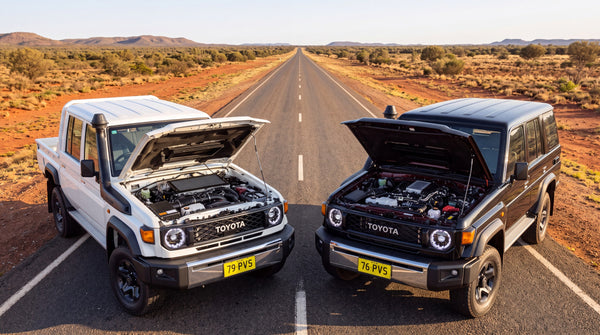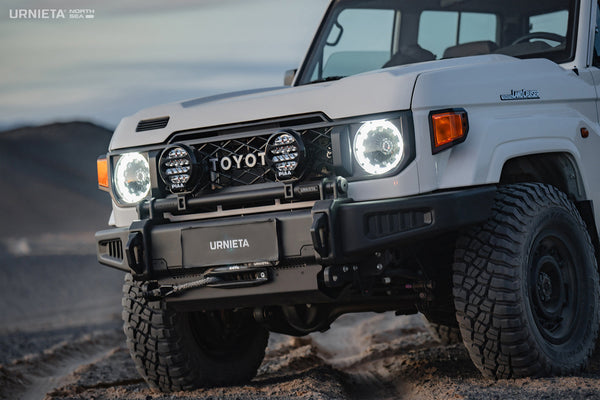



Toyota Australia has put the incoming LandCruiser 70 Series upgrade through more than 100,000 kilometres of local testing, over corrugated dirt roads, rugged cattle stations and severe washouts, before signing off on the changes ahead of a fourth-quarter 2016 launch.
The programme concentrated on the best-selling single cab-chassis. Around 70 per cent of those kilometres were off road, so Toyota's Australian engineers could tune the package for how and where you actually use the 70.
At a Glance
- Stiffer new frame with thicker side rails for the single cab-chassis, reducing vibration and improving handling and stability.
- All variants, including single and double cab-chassis, wagon and troop carrier, gain vehicle stability control, traction control, hill-start assist, brake assist, electronic brake-force distribution and cruise control.
- Single cab-chassis expected to achieve a five-star ANCAP safety rating, adding curtain-shield and driver's knee airbags to the existing driver and front-passenger units, for a total of five airbags.
- Existing 4.5-litre V8 turbo-diesel retained, upgraded to Euro 5 certification and fitted with piezo injectors for improved low-speed response.
- Manual-only transmission retained with revised gearing aimed at better fuel economy and reduced noise, vibration and harshness.
The big mechanical change is a stiffer ladder-frame chassis with thicker side rails. Toyota's local engineers then retuned spring and damper rates to suit the new structure, and signed off the calibration for Australian conditions.
On safety, this is a big step for a model that has always put capability ahead of electronics. Vehicle stability control and traction control are tuned by Australian engineers for dirt roads, rural properties and country highways, not sealed city streets. Every body style in the 70 Series range gets the full active safety suite.
The engine is refined, not replaced. The 4.5-litre V8 turbo-diesel with common-rail direct injection and an intercooler carries over, now certified to Euro 5. Piezo injectors sharpen throttle response at low engine speeds, which matters in low range. Revised gearing in the manual targets better fuel economy and a quieter, smoother drive.
Toyota Australia's executive director sales and marketing, Tony Cramb, framed the investment as what it takes to keep the model on sale here. "At the same time, it receives important safety and emissions updates that are required by many customers, as well as regulators, to enable Toyota to continue selling the 70 Series in the Australian market," Mr Cramb said.
Mr Cramb also pointed to the model's character: "The upgraded 70 Series LandCruiser range builds on this iconic vehicle's fit-for-purpose appeal with improvements that reinforce its heavy-duty abilities, durability and unapologetically rugged character."
If you own a 70 or you're shopping one, this is the most thorough revision the platform has had in years. The stiffer chassis and revised suspension may change what your aftermarket setup needs.