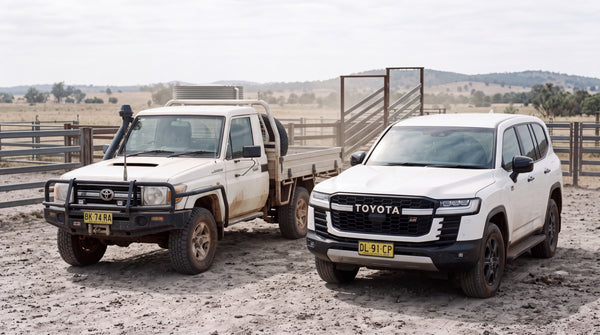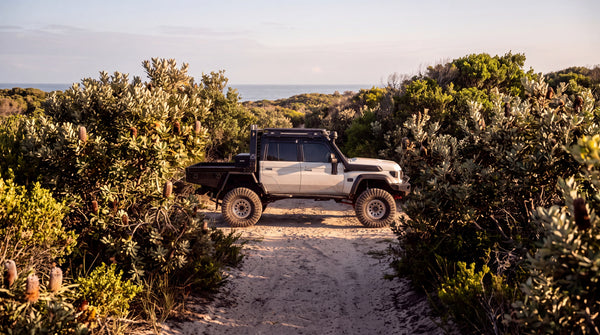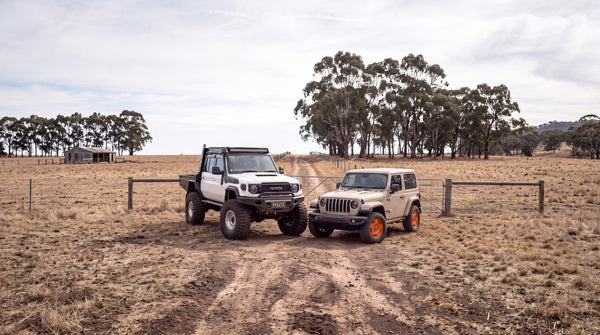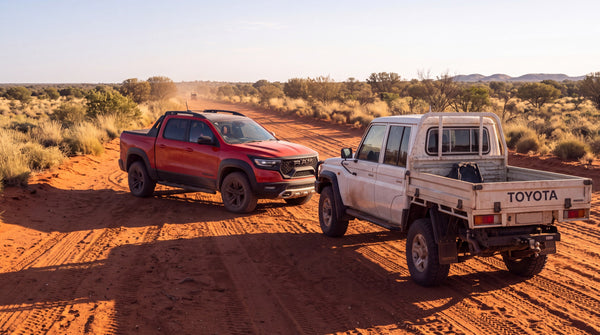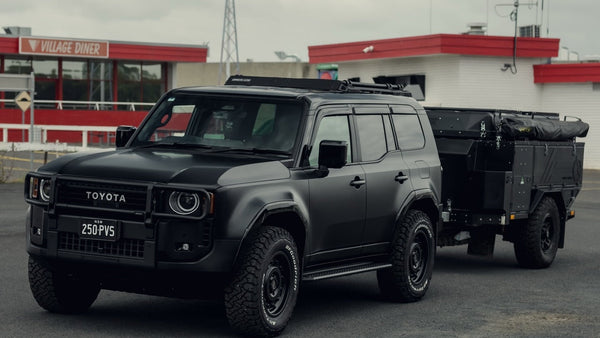



Each step from 33s to 35s to 37s on the 70 Series is a trade, not an upgrade. Go too small and you leave capability on the table. Go too big and you build a vehicle that drinks more, wears faster and needs more supporting work than you budgeted for. The right size depends on what you actually do with your 70 Series, and the tyre debate is the most argued topic in any forum thread, campfire circle or work car park.
The 70 Series arrives from the factory with more wheel arch room than most platforms. Boxy guards, long travel suspension and the sheer height of the body mean you can grow a fair bit before you reach for a cutting wheel. That room isn't unlimited. Plenty of builds end up with supporting work that costs three times more than the tyres did.
At a Glance
- Your 76, 78 or 79 runs a live axle at both ends: no diff drop, no CV plunge angles, and none of the lift advice written for independent front suspension utes applies to you.
- 33s go on with little or no supporting work and cover the majority of touring.
- 35s are the mainstream ceiling, and the size where gearing, braking, guards, speedo and fuel all need attention.
- 37s are legal on a 79, but only as a full Superior Engineering 5 inch Outback Tourer package certified before the vehicle is first registered.
- Marks 4WD portal axles give you 150mm under the diffs while you stay on 35s, which is the clearance most people buy 37s to get.
- A Superior Engineering coil conversion swaps the rear leaf springs for a long arm coil setup, and their federally approved kits carry compliance to 35s or 37s.
A solid axle changes the whole checklist
Most tyre advice you'll read was written for a ute with independent front suspension, and almost none of it transfers to your 70 Series. Your 76, 78 or 79 carries a live front axle on coil springs, located by radius arms and a panhard rod, with leaf springs under the back. Toyota moved the front end to coils in 1999 and left the rear on leaves, which is still the layout Toyota sells today.
Because the front diff is bolted into the axle, it moves with the wheels. There's no diff drop kit to fit, no CV plunge angle to rescue and no lower control arm running out of travel. Your clearance under the front diff is set by tyre diameter and nothing else, which is why an inch of tyre buys you real ground clearance on a 70 Series in a way it never does on an independent front end.
What you deal with instead is the geometry around that axle. Lift it and the castor angle rolls back, the steering wanders at speed and the wheel stops self centring, so you correct it with drop radius arms or offset bushes. Lift it and the panhard rod pulls the axle sideways, so you fit an adjustable rod to put the axle back under the guards. Add diameter and width and the drag link, tie rod, steering damper, wheel bearings and birfields all carry more load than Toyota designed them to carry. None of that shows up on an independent front suspension checklist, and all of it shows up on yours.
There's one more 70 Series quirk that bigger tyres make louder. The rear track sits around 95mm narrower than the front, left over from 2007 when Toyota widened the front end for the V8 and carried the old rear axle across. Your rear wheels don't follow the front wheels through ruts, sand or a wet grass camp entry, and the wider the tyre, the more obvious that gets. Track correction is a real fix and it's built into the better rear axle and portal options below.
33s, the honest choice nobody regrets
A 33 is the size you fit and then forget about. On a stock or mildly lifted 70 Series, a 285/75R16 or a 33x12.5R16 clears the guards with little drama, so there's no body lift, no guard cutting and no immediate case for a re-gear. Your speedo error stays inside a sensible margin and fuel use doesn't fall off a cliff. For the Great Central Road, the Gibb River Road or a serious Victorian high country run, 33s are plenty of tyre.
The honest case for stopping here is compound, not diameter. A well chosen 33 in a quality mud terrain or aggressive all terrain will out-perform a cheap 35 nearly every time you air down. Tread pattern, casing construction and sidewall strength matter more than an inch of height at this end of the range. A 33 also stays more civil on the highway, which counts if your 79 does weekly driver duty or tows.
Fit a 2 inch lift alongside them and you've solved the only real complaint, which is inner guard rub at full articulation. Flares go on once you're wider than the factory 265mm section, and at 12.5 inches wide they're required everywhere. The look reads purposeful rather than stock, which is either enough for you or the reason you're already reading the next section.
35s, where serious touring begins
A 35x12.5R17 or a 315/70R17 is the point where your 70 Series both looks and works the part. More sidewall volume soaks up corrugations, spreads a bigger contact patch at low pressure in soft sand and lifts the diffs clear of the ruts that stop a 33. It's also the size the aftermarket has engineered around, which matters more than any of the above.
The supporting list is real and it's finite. Guards need flares in the 40mm to 60mm range and attention at full lock and full compression. A quality lift in the 50mm to 75mm range keeps the geometry honest, and your radius arms need to carry castor correction for that height rather than leaving it at the factory angle. Then the gearing argument turns serious. Factory diff ratios were chosen around a 30 inch tyre, so a 35 makes those ratios effectively taller, which blunts low speed torque, adds turbo lag under load and pushes heat into the driveline while you're crawling. A re-gear fixes it directly and is the most worthwhile thing you can spend money on at this size.
Braking is the other conversation. A bigger diameter increases the lever arm against brakes that were sized for the factory tyre, so the stopping distance you rely on quietly gets longer unless you upgrade the pads, rotors and lines. Your speedo also needs correcting at 35 inches, and in most states that's a compliance issue rather than a preference. Fuel use on a 70 Series diesel climbs 10 to 15 per cent, and you'll notice it at the bowser rather than on the gauge.
The stance on a moderate lift is the one most owners are chasing, and 35s dominate the builds that actually get used. Real capability, a parts list you can price up front, and the size that spring rates, flares, arms and approvals are all built around.
37s, the build commitment
A 37 is a different project, not the next rung on the ladder. The arch fills completely, the ride height is commanding, and on genuine rock or in deep sand the extra diameter and sidewall volume deliver what 35s can't match. What it costs you is comprehensive.
Guards need cutting or flares to stay off the tyre through full travel. A significant lift, corrected castor, a longer adjustable panhard rod and heavy duty steering all go on the list, and the re-gear moves from advisable to mandatory. Diff, gearbox and transfer case all work harder, and anything that was tired before the tyres went on will tell you about it. Wheel and tyre weight climbs a long way at this diameter, and you feel it in steering effort, steering return, wheel bearing life and the spare tyre carrier that now has 40kg hanging off it.
The compliance question has a better answer than it used to. Australian rules under VSB14 allow a rolling diameter up to 50mm larger than any tyre Toyota specified for the model, with combined lift limits on top, so a 33 sits near that line and anything above it needs certification behind it. At 37 inches that certification exists, and it comes as one package rather than as parts. Superior Engineering's 5 inch Outback Tourer kit for the 79 is legally complied on 37 inch tyres under second stage manufacture, and everything the tyre demands is in the kit rather than left to you.
The engineered answers: coils and portals
The two kits worth understanding sit either side of the problem, and we run both in our own vehicles. One fixes how the 70 Series carries load and articulates. The other fixes the clearance you were chasing with a bigger tyre in the first place.
Superior Engineering coil conversion
The Superior coil conversion replaces the rear leaf springs on a 79 with a fabricated crossmember, coil springs and long control arms. On a leaf sprung axle the spring both suspends the vehicle and locates the diff, and it's poor at the second job. Moving the locating work to upper and lower arms lets the spring do one thing, which is why the conversion picks up so much articulation and kills the rear steer and axle tramp you get out of long leaves.
Superior builds it in Brisbane in bolt in and weld in versions. The weld in spreads load across close to twice the chassis area, needs an AS1554.1 certified welder, and gets plated with an LS6 approval code on inspection with the NCOP paperwork supplied in the kit. Their bigger federally approved kits go further again: 75mm to 100mm of lift, a 4,495kg GVM on a dual cab, the factory 3,500kg braked tow rating retained, and legal compliance up to and including 35 inch tyres on 315/70R17, with a CANBUS speedo module calibrated to the exact tyre and offset you nominate. The heavy kits run a chromoly diamond diff housing with 90mm axle tubes and RCV 300M axles, available track corrected so the rear finally lines up with the front.
Step up to their 5 inch Outback Tourer kit and the 37 becomes a legal tyre. That version runs 100mm to 125mm of lift, a 4,000kg GVM, the factory 3,500kg tow rating and 6,800kg GCM, a 3,150kg rear axle and a track corrected chromoly housing that brings the rear wheels parallel with the front. It's complied on 37 inch tyres, and the parts that make a 37 fit are supplied with it: fibreglass flares built only for this kit, a replacement inner guard section for the trimming the tyre needs, and a wider single hoop bullbar with the headlights relocated into the bar to meet ADR. Both approval tiers are second stage manufacture on a brand new vehicle before its first registration, with in-service approval possible in some states, and both are fitted and signed off only at a Superior approved production facility. The 2024 facelift 79 sits outside the flare and bullbar part of it.
The front half matters as much. Their kits come with drop radius arms as standard, with Superflex and Hyperflex options above that, and every arm is built with the castor correction for the lift height rather than leaving you to chase it later. An adjustable panhard rod recentres the axle, and a billet drag link and tie rod take the steering back to factory geometry with more strength behind it. Budget 2 to 5 days of workshop time, and a hoist.
Marks 4WD portal axles
Portal axles answer the clearance question directly. A gear set at each hub drops the axle centreline below the wheel centre, so the Marks 4WD portal axle kit lifts the whole vehicle 150mm at the diffs without touching spring height. Diff clearance ends up equivalent to running 43 inch tyres on a standard LandCruiser, and it does that on 35s, on 17 or 18 inch wheels, which is the size the kit is engineered and approved around.
The knock on effects are the interesting part. Because the lift happens under the axle rather than under the body, your centre of gravity, control arm angles and universal joint angles stay near factory, so you avoid the bump steer and driveline vibration that come with a tall spring lift. The portal gears also reduce torque through the driveline by about 16 per cent, so the diffs, axles and CVs see less load and the effective gearing gets shorter, which does the same job a re-gear does for a big tyre. Track goes out 80mm and the rear axle is corrected to match the front, so that 95mm mismatch disappears.
The kit runs one piece heavy duty swivel housings, air operated free wheeling hubs, slotted rotors with ceramic pads, ADR approved braided lines, remote breathers on all four portal boxes and a transfer case drum handbrake or an electric park brake. GVM goes up to 4,000kg with the factory 3,500kg tow rating and a 7,010kg GCM, though loaded to full GVM your towing drops to 3,010kg. It's second stage manufacture compliant and legal in every state, and it fits VDJ76, VDJ78 and VDJ79 up to 11/2022, the VDJL models after that, and the GRJ71, 76, 78 and 79. Servicing costs you a portal oil change every 10,000km, 600ml a corner at the front and 1,000ml at the rear.
The verdict, take a position
If you tour seriously and still cover real highway distance, 35s are the right answer. You get a genuine capability step, the parts list is finite and well understood, and everything from suspension to approvals has been engineered around that size. Re-gear it, lift it properly, correct the castor and check the brakes, and your 79 becomes a better version of itself instead of a compromise in two directions.
33s aren't a consolation prize. They're the correct choice if you value low running costs, highway manners and a vehicle that needs nothing else changed to work well. For long distance touring with occasional technical terrain, a quality 33 will serve you better than a budget 35 with no supporting work done.
37s are for a specific build and a specific owner, and the honest advice is to buy the approval and the tyres together. Bolting 37s onto a 79 built for 35s is the version that goes wrong; the Superior 5 inch kit is the version that gets plated, because the lift, the housing, the flares, the guard work and the bullbar are all part of the same certificate. Decide before the vehicle is registered, because that's when the paperwork is easiest. If clearance rather than the look is what you're after, portal axles get you further under the diffs than a 37 does while you stay on a 35. If ride and load on a tray is the problem, the coil conversion is the deeper fix. All of it is workshop time measured in days rather than hours, and all of it is worth planning before the first tyre goes on a rim.
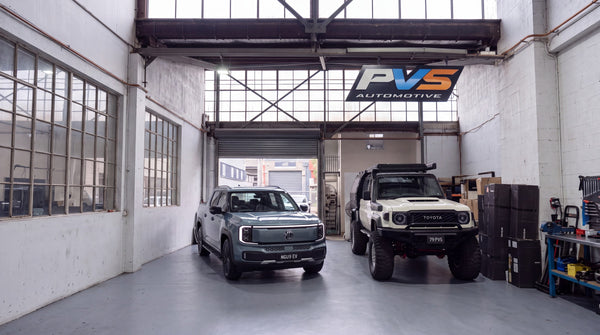
If the tyre change has your 70 Series off the road anyway, the PVS Automotive 70 Series headunit range is worth a look while it's up on the hoist. A bigger screen makes maps legible in dust and glare, and a dedicated offline maps app becomes far more usable on a quality display.