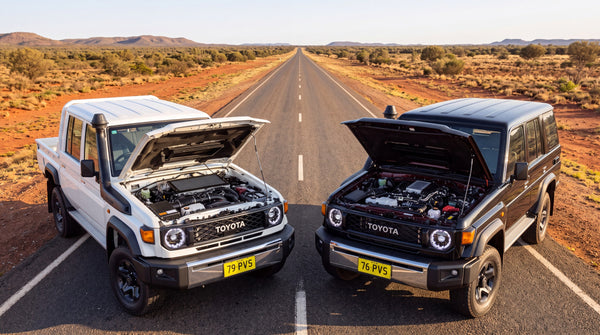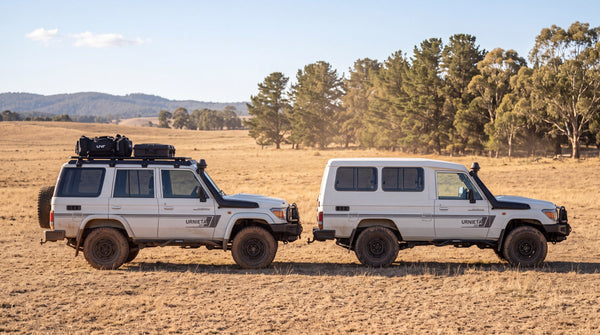



Toyota has ended production of the 4.5-litre V8 turbo-diesel in the 70 Series, and dealers have confirmed final V8 deliveries are done as remaining stock clears. The range now runs only the 2.8-litre four-cylinder turbo-diesel. From MY26 every 70 Series sold in Australia gets a 20-litre AdBlue tank to meet Euro VI emissions requirements under ADR 80/04, extended to all applicable vehicles sold from 1 November 2025. That's a big pivot for a nameplate that ran its V8 for nearly two decades, and it's already shifting the conversation around V8 LandCruiser value.
Whether the 79 Series V8 ends up carrying a collector premium, nobody can say for sure. The conditions that usually produce one are here: fixed supply, a long and well-regarded production run, and a successor that's genuinely different in character. Here's what matters if you own one or you're shopping for one.
At a Glance
- Toyota has discontinued the 4.5-litre V8 turbo-diesel, and all remaining dealer stock has now been delivered.
- From MY26, every new 70 Series carries a 20-litre AdBlue tank to satisfy Euro VI (ADR 80/04) requirements.
- Market observers and dealers report rising interest in late, low-kilometre V8 examples, particularly the 79 Series V8 dual-cab.
- Values may firm for clean, well-kept examples, but collector premiums are never guaranteed and the used market stays unpredictable.
- If you're keeping your V8, aftermarket support across interiors, audio, steering wheel controls and lighting is still strong.
Why the AdBlue changeover matters for V8 LandCruiser value
An AdBlue system isn't just a tank and a filler cap. Selective catalytic reduction brings a new maintenance consumable, extra sensors and failure points the outgoing V8 never had. If you use your 70 Series in genuinely remote country, the older engine's relative mechanical simplicity is a practical draw, not just nostalgia. That's one reason market observers are watching V8 stock closely. For what the AdBlue requirement means day to day, read our full breakdown of the MY26 AdBlue changes.
Supply is now fixed. No more V8 70 Series will be built, so the pool only shrinks as kilometres pile on and accidents take examples off the road. That tends to support values for the cleanest, lowest-kilometre survivors. Be clear on the limits though: firming values for desirable variants is a possibility, not a certainty. Buying a late V8 purely as a speculative asset carries the risk any used vehicle market carries.
What makes a 79 Series V8 worth watching
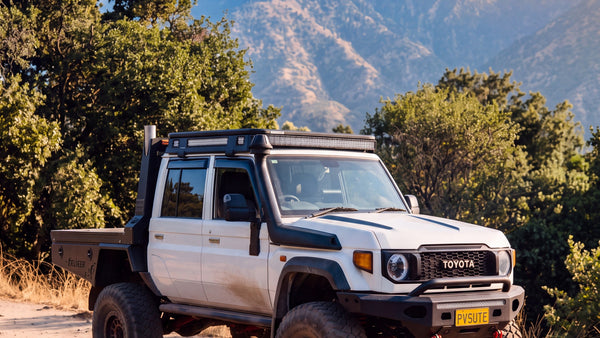
The 79 dual-cab is drawing the most attention, because it pairs the V8 with the most versatile body. Dealers report enquiries from buyers who missed out on new stock and are now looking at demonstrators and low-kilometre trade-ins. The usual resale factors apply: full service history, original condition, modest accessory fitment that hasn't compromised the chassis or body, and low kilometres.
For how long this V8 ran and why the farewell hit so hard, our earlier piece on the V8 farewell and the manual gearbox era covers the history. Nearly two decades of largely unchanged mechanicals means parts availability is mature, independent servicing knowledge is everywhere, and the maintenance profile is well understood. That's a real advantage over stepping into a newer, more complex drivetrain.
Keeping your V8: the case for upgrading rather than selling
If you're sitting on a well-maintained V8, the maths has shifted. Swapping a late-model V8 for a new four-cylinder AdBlue vehicle means a different engine character, a new maintenance requirement and current new-vehicle pricing. You also give up an asset that may get harder to replace at a sensible price. Upgrading and personalising a keeper often makes more financial sense.
Aftermarket support for the 70 Series is still strong. Interior upgrades, audio systems and steering wheel control integration are all well covered, and a quality headunit or better cabin comfort adds day-to-day usability without touching the drivetrain. PVS Automotive wireless steering wheel control modules integrate with the 70 Series without cutting factory looms, which matters if you want to protect resale condition.
The responsible way to think about V8 collectibility
Collectible vehicle markets are hard to predict. The V8's discontinued status and the shift to AdBlue create the sort of story that often runs alongside rising interest in an outgoing model, but a story and a market outcome are different things. Prices may firm for genuinely clean, late-build examples. They may also just track the broader used four-wheel-drive market with no collector premium at all.
What isn't in doubt: the V8 LandCruiser's long production run, its reputation for durability and the size of the change to the AdBlue four-cylinder give you good reasons to think hard before selling. If your V8 is in good order, keep it serviced and upgrade the interior and electronics as you go. That's a sound plan wherever values settle.