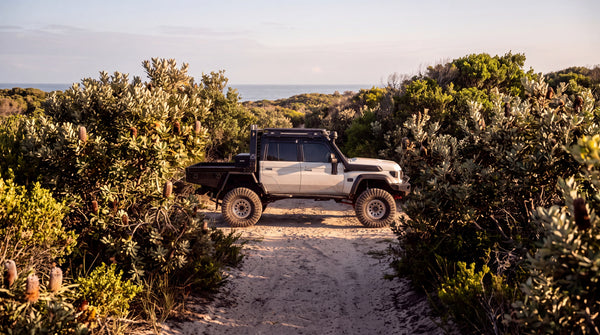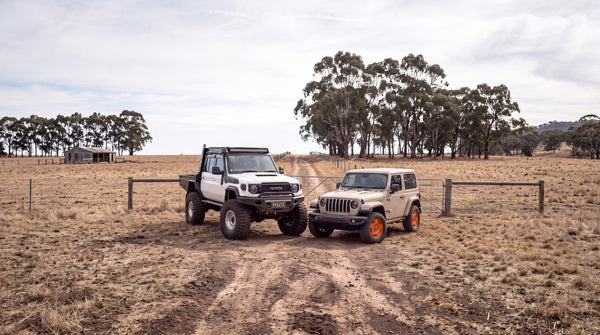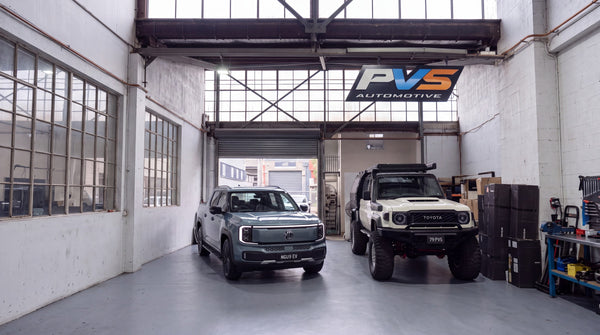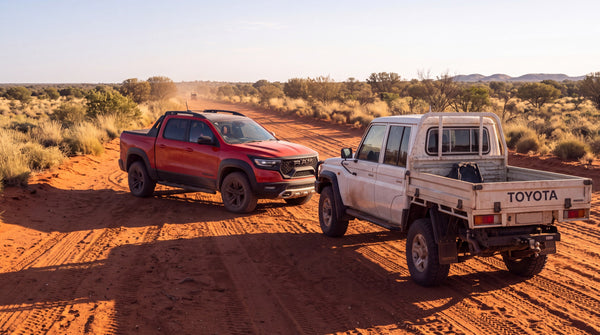



The LandCruiser 70 Series has been on sale in Australia in essentially continuous form since 1984, and the buyer base that grew around it isn't shy about opinions. The late-2023 facelift gave the 70 Series a new face, an extra engine and a new transmission, and it split owners into two camps: those who welcomed the changes, and those who went hunting for clean pre-facelift examples before dealers ran out. Neither instinct is wrong, but the decision deserves more than nostalgia or novelty.
Shopping new, buying used, or working out whether to keep what you've got? Here's what actually separates the pre-facelift (2007 to 2023) from the facelifted (late 2023 onward) 70 Series, without declaring a winner, because the right answer depends on how you use it.
At a Glance
- Pre-facelift vehicles run the 4.5-litre V8 1VD-FTV diesel with a five-speed manual, a combination that still commands strong resale.
- The facelift added a 2.8-litre four-cylinder producing 150kW and 500Nm, paired to a six-speed automatic. The V8 stayed on sale alongside it.
- The V8 is now finished. Production ended in September 2024 for most variants, the 79 Series GXL single and double cab utes ran into 2025, and the last customer deliveries were completed late that year. Every V8 you can buy today is a used one.
- The facelift brings a 6.7-inch touchscreen with wired Apple CarPlay and Android Auto, plus meaningfully more safety technology.
- MY26 facelift vehicles add AdBlue (diesel exhaust fluid) to the equation, a maintenance consideration worth factoring into ownership costs.
- Aftermarket steering wheel control modules, audio upgrades and headunits fit both generations on dual-airbag dash vehicles from late 2009 onward.
What the pre-facelift got right
The 4.5-litre single-turbo V8 1VD-FTV is the engine most people picture when they think 70 Series. Large displacement, heavy on fuel by modern standards, and enormously well-regarded in the field. Paired to a five-speed manual, it gives you direct mechanical control that a lot of serious off-road users prefer. No torque converter, no transmission calibration to second-guess, and no software update changing shift behaviour after a service.
The cabin was minimal, which was either a feature or a flaw depending on your view. No factory touchscreen, no CarPlay, and connectivity was whatever you fitted yourself. If you were always going to replace the head unit anyway, that blank slate is an advantage rather than a compromise. A well-chosen aftermarket head unit, properly integrated with your steering wheel controls, can beat plenty of factory systems from that era.
Resale matters here. Pre-facelift V8 examples in good condition have held value stubbornly, partly because supply of low-kilometre vehicles is tightening and partly because the V8-manual combination has become a collector proposition in its own right.
What the facelift brings
The 2023 facelift is more than a new grille, though the retro-styled front end drew plenty of attention on its own. The mechanical changes are the real story. The 2.8-litre four-cylinder GD-FTV, producing 150kW and 500Nm in automatic specification, is more thermally efficient than the V8 and considerably better on fuel across typical mixed-use driving. The six-speed automatic is smooth, suits highway cruising, and takes the fatigue out of long outback runs where constant clutch work in traffic or technical terrain adds up.
The factory 6.7-inch touchscreen with wired CarPlay and Android Auto is a real upgrade if you drive daily. Navigation, phone and audio all run through one interface with no separate aftermarket install. The expanded safety technology suite, including features that were absent or optional on pre-facelift vehicles, reflects how far the broader market has moved on active safety in the past decade.
MY26 models introduce AdBlue, and you'll want to understand it before you buy. The system needs periodic top-ups of diesel exhaust fluid and adds a layer of maintenance discipline to plan around if you travel remote, particularly where AdBlue availability is limited.
The V8 didn't end with the facelift
This is the part most comparisons get wrong, and it changes what you're actually choosing between. The late-2023 facelift didn't retire the V8. Toyota added the four-cylinder and the six-speed automatic to the range and kept selling the 4.5-litre V8 beside it, so there are facelifted vehicles wearing the new face with the old engine under the bonnet.
The V8 ended later, and in stages. Production finished in September 2024 for most variants, while the 79 Series GXL single and double cab utes carried on into 2025, with the last customer deliveries completed in the final quarter of that year. Toyota put the retirement down to changing regulations and community expectations after 17 years of local sales. The 2.8-litre four now carries the entire range, and it has since picked up a manual gearbox of its own, so the old shorthand of V8 equals manual and four equals automatic no longer holds either.
If you're buying in 2026 the practical consequence is simple. A new V8 isn't an option at any price, from any dealer. Your choice is between a used V8, pre-facelift or facelifted, and a new or near-new four-cylinder. That's a used-versus-new decision as much as a generational one, and it's worth weighing with the usual used-vehicle questions about history, hours and how hard the vehicle has worked.
Off-road and working use: does the generation matter?
For genuine working vehicles and serious off-road use, both generations are capable platforms. The V8 manual has a proven record in remote and agricultural work where simplicity and parts familiarity matter. The 2.8 auto has its own strengths, including better fuel economy on extended trips and a transmission that handles low-speed crawling competently.
The choice usually comes down to the job. If you're running remote stations where mechanical self-sufficiency is a daily reality and spare parts availability counts, the V8 manual ecosystem is deeper. If you're covering long highway distances and want something you can hand to multiple drivers, the auto's approachability is a real advantage.
Aftermarket compatibility across both generations
Whichever side of the facelift you end up on, the aftermarket has you covered. Steering wheel control interfaces, audio upgrades and replacement head units fit dual-airbag 70 Series dashboards from late 2009 through to current production. You're not locked out of modern connectivity or control integration because you own a pre-facelift vehicle, and if you own a facelift you can still build on the factory setup. PVS Automotive's wireless steering wheel control kit, for example, adds wheel controls to pre-facelift vehicles that never had them, and carries a lifetime warranty on the electronics.
Which one should you buy?
Start with what you can actually get. A new V8 isn't one of the options, so if the V8 is what you want, you're shopping used and condition matters more than the badge on the grille. Beyond that there's no universal answer, and anyone who tells you otherwise is selling something. If you want mechanical simplicity, the V8 soundtrack and a true manual gearbox, and you're comfortable sourcing a used example with known history, the pre-facelift is still an excellent choice. If you want better efficiency, modern safety technology and factory connectivity, and you're happy managing AdBlue on MY26 variants, the facelift is the easier daily companion.
Match the vehicle to the use. Both generations are legitimate, capable 70 Series vehicles, and the aftermarket means neither one has to feel like a compromise.