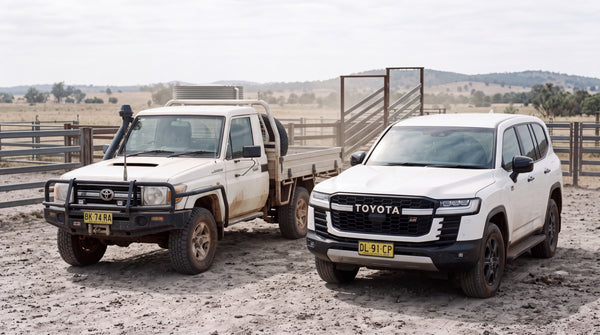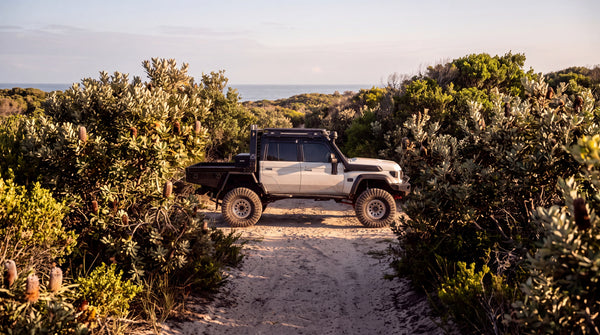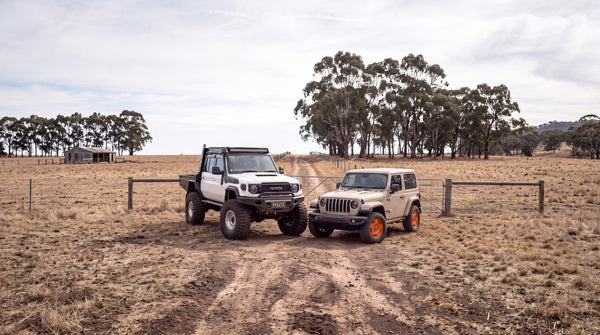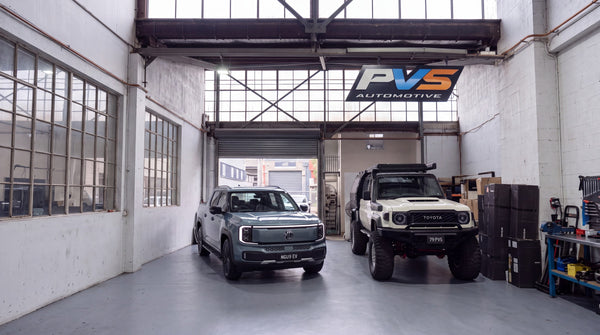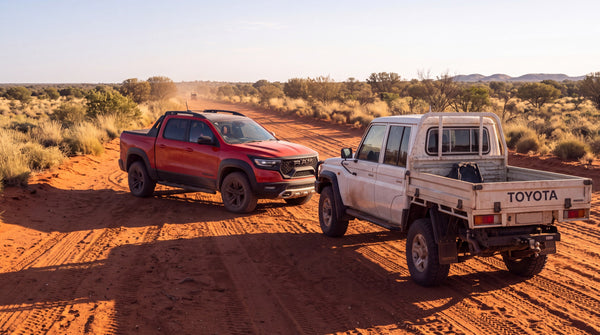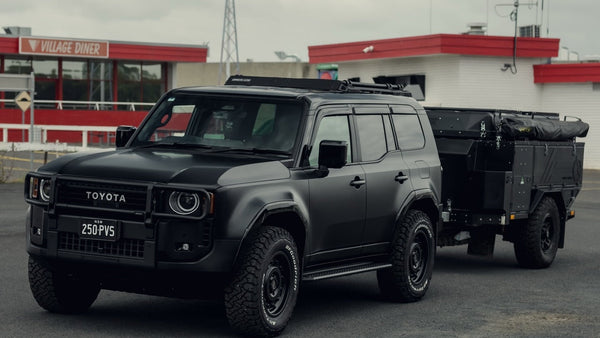



Buy a brand-new 79 Series dual-cab today and it arrives with no reversing aid fitted from the factory. No camera, no sensors, no mirror display. That's a real gap on a vehicle that tows trailers, backs into tight worksites and sits in suburban driveways with kids around. It's been the reality for the entire 2007-to-current generation of the 79 Series.
New vehicles sold in Australia increasingly include reversing aids as standard, so the omission on the 70 Series feels dated. The aftermarket has caught up. A well-chosen reverse camera retrofit is cleaner and more capable than anything Toyota offered in this class a few years ago.
At a Glance
- The 70 Series (2007 to current) has never shipped with a factory reverse camera on cab-chassis and ute models.
- Blind-spot depth behind a 79 Series tray is a well-known safety problem on worksites and in tight spaces.
- Two main retrofit paths exist: standalone mirror/screen kits, or a camera integrated into an aftermarket headunit.
- Integrated headunit installs are generally the cleanest, with the image appearing on the main screen complete with guidelines.
- Camera wiring connects to the reverse light circuit so the feed triggers automatically whenever reverse gear is selected.
Why most 70 Series never got a factory camera
The 70 Series is a working vehicle built on a platform that predates mainstream reversing-camera technology. Toyota has updated safety and convenience features across successive facelift cycles. The cab-chassis body style, with its separate tray, creates mounting and wiring complexity the factory has never solved with an integrated setup. So unless you drive a 76 wagon from the late-2023 update on, which has a factory camera, you're left to sort it out yourself, whether you run a troop carrier or a 79 Series ute.
On a 79 Series dual-cab with a full-length tray, the blind zone extends a long way behind you. Backing a loaded ute toward a fence, reversing a trailer into a tight spot, checking for children in a driveway: each one carries real risk without a camera. On this vehicle it isn't a comfort feature. It's a safety one.
Option one: fit a standalone mirror or screen kit
The most straightforward retrofit is a dedicated reverse camera paired with a small monitor, often built into a replacement rear-view mirror. These kits are self-contained, fairly simple to install and work independently of whatever head unit you already have. They suit you if you want the factory dash left completely untouched.
The trade-off is an extra screen in the cabin, plus a long wiring run from the rear of the vehicle to the mirror that needs tidy management. The display is usually smaller and lower resolution than a dedicated aftermarket screen. On a working ute with a busy dash, that's one more thing to manage.
Option two: run the camera into an aftermarket headunit
The cleaner approach, and the one most installers recommend for a permanent daily driver, is to run the reverse camera into an aftermarket headunit so the image shows on the main screen. No secondary display, no duplicate wiring runs, and the reversing guidelines sit on a large bright screen already in your eyeline. Drop into reverse and the camera feed appears automatically. Come out of reverse and the screen returns to what it was showing before.
Camera placement on a 79 Series is usually above the rear number plate or on the tray headboard. Both give you a usable view of the ground immediately behind the vehicle and the towball. Wiring runs forward along the chassis to the headunit, with a trigger wire tapped into the reverse light circuit so it activates on its own.
The PVS 9-inch MK4 headunit is built for the 70 Series dual-airbag plastic dash (late 2009 to 2026) and includes a reverse camera in the box at no extra cost. It's priced at $2,099 and carries a 36-month warranty, which is well beyond the industry standard for this category. An OBD2 engine-data dongle is included too, so you can see live vehicle diagnostics through the head unit. If you're already looking at a headunit upgrade for wireless Apple CarPlay and Android Auto, covered in our wireless CarPlay guide for the 70 Series, bundling the camera into the same install is the tidiest and most cost-effective way to do it.
What to plan for on a 79 Series install
The long body of the 79 Series means a longer cable run than most passenger vehicles, so a quality shielded cable is worth the small extra cost to keep interference off the image. A competent auto electrician or car audio specialist can do the full install, camera mounting, cable run and headunit fitting, in a day. If you're mounting to a steel tray, use stainless hardware so rust doesn't track down onto the number plate area over time.
Camera height and angle matter more on a high-riding ute than on a passenger car. Set correctly above the number plate, a wide-angle camera shows you the towball, the ground immediately behind you and enough either side to make backing into tight spots manageable. It won't clear every blind zone. It does cover the most dangerous one: the area directly behind the vehicle that your mirrors can't reach.
The practical case for retrofitting
Worksites increasingly expect vehicles to meet minimum safety standards, and a reverse camera is a fair baseline on something the size of a 79 Series. Off the worksite the case is just as plain: tighter urban parking, reversing with a trailer, and knowing what's behind you before you move. The 70 Series is a vehicle you keep for a decade or more. Across that kind of ownership, a well-installed reverse camera pays for itself many times over.